
Must-read Fantasy Novels - A Christmas Carol
Best place to be a miser

 Apple Podcasts
 Amazon Music
 Spotify
 JioSaavn
 Castro
 Sometimes fantasy stories define how we live our lives. Take Christmas. Dickens has been hugely responsible for our expectations of the season, not to mention the Christmas movie industry. Julia Golding takes a deep dive into the must-read fantasy ghost story, A Christmas Carol, and how Dickens designed and performed the story. She unpicks what makes it work. Have a listen and see if you agree. And finally, where do you think is the best place to be a miser in fantasy?
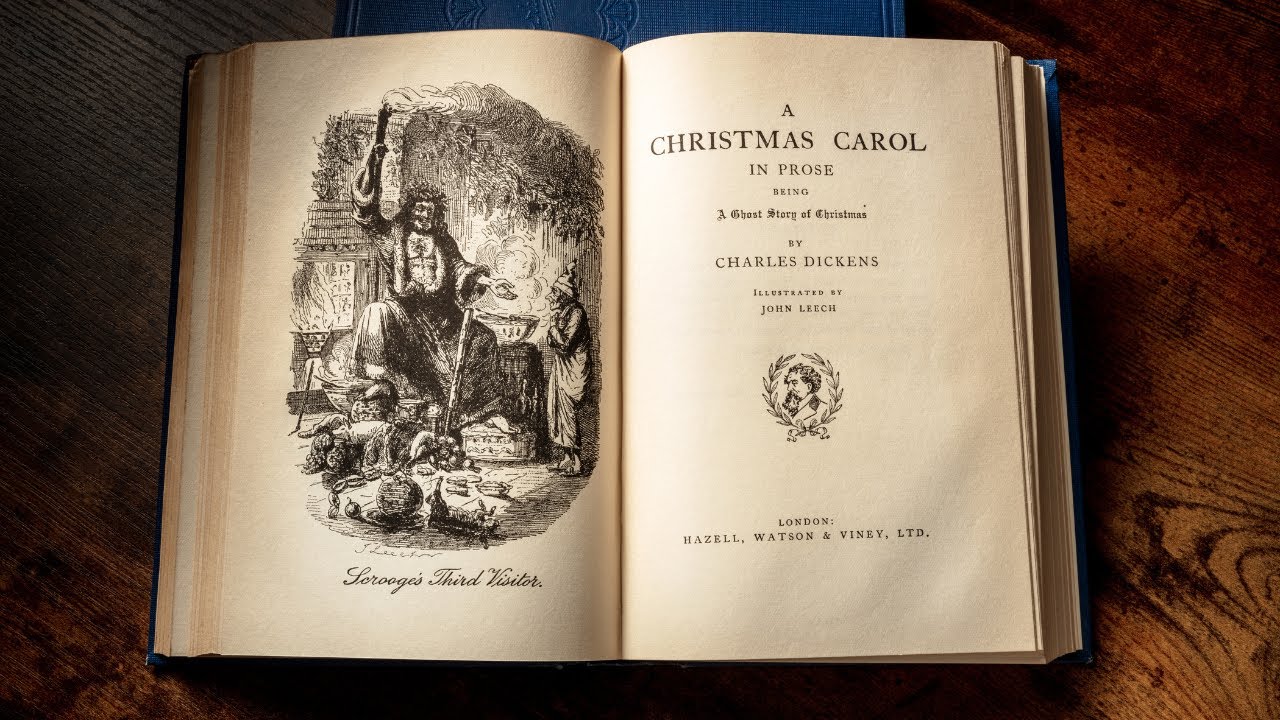
Hello and welcome to MythMakers. MythMakers is the podcast for fantasy fans and fantasy creatives brought to you by the Oxford Centre for Fantasy. My name is Julia Golding. I'm an author and screenwriter but also director of the Centre. Today I'm going to carry on with my series of fantasy books that you really should get around to reading and my pick today might well already be well known to you but you might not have thought about it as a fantasy story. And today's pick is A Christmas Carol by Charles Dickens. Now why is this fantasy? Well the very first thing to remember is that it is structured around screws being visited by three ghosts. Now you may say well actually ghosts are horror they could be real but the way the ghost transport him through the equivalent of portals to his past to different places in his present and to his future is very much a sort of fantasy trope so I'm claiming it for fantasy. A Christmas Carol was first published in 1843 by the London publisher Chapman and Hall and that edition has illustrations by John Leach which you may also have seen because if you google them you'll find them and they have those images about around which many of the adaptations have sort of picked on of the what screws looks like and what the ghosts look like. So it was a very wonderful production to launch this book and I think present day authors would love to have that treatment of fully illustrated novella around Christmas time I mean it was the dream package really. It was wildly successful in its own era and Charles Dickens went on to write several other Christmas books a bit like we now have the Christmas movies he started producing the Christmas books because Charles Dickens was quite a cany marketing person. So why have I chosen the Christmas Carol? Well I've chosen it because it is one of those books one of those fantasy books which has become a lens through which we see something and in his case it's the Christmas period. Charles Dickens was writing at a time when Christmas was being sort of redefined so if you read 18th century accounts in England of Christmas it was very much focused around 12 days of Christmas feasting there was some idea of mumming where you would go from house to house and sort of traditional mummers like entertainers with knock-on doors, carol singers but there wasn't this overwhelming sense of peace and goodwill that sort of it's the most important time of the year kind of pressure that the season has now attracted it still had its roots in obviously the winter festival that the Christian church borrowed in order to set the birthday of Christ but it wasn't such a huge deal as it is since the Victorian period and Victorians themselves began to redefine Christmas you probably already know the story of Queen Victoria's husband Albert bringing in some traditions from Germany so things like the Christmas tree and of course we get the rise and rise and rise of the image of Father Christmas at this time Saint Nicholas who was once upon a time primarily described as a saint and he sort of morphed over the over this period into being the sort of Santa Claus Father Christmas who is now a star in many a movie so Christmas was in flux into this comes Charles Dickens who loved a party and he loved theatricals and I think both of these are very evident in the way he thought of Christmas in a Christmas carol so let's think about it as a piece of writing before we turn to the adaptations of it if you haven't read it and you may well have perhaps think you know it so well that you may not have actually read the book you might be surprised to find that it is structured in staves so he's playing on the idea that it's a Christmas carol so it's got staves or verses like a carol wood and it's got a very very strong structure so you have the first day of a kind of prologue piece where Scrooge is sitting in his office making life miserable Bob Cratchits refusing to support causes for the poor turning away the carol singers all the stuff that makes it into the films and actually it's interesting that very few of the plot moves are left out when you see adaptations because Dickens has such a strong structure then he goes home and as well he's preparing to go to bed that he is visited by his old partner Jacob Marley who appears as the ghost carrying his cash boxes and he warns that what you do in life follows you after death but the problem about being dead is you can't do anything about it you can only weep for the people that you mistreated and Scrooge is in his he's not wanting to believe in this phase and so he has the wonderful line that he accuses Jacob Marley of being a piece of undigested cheese you know he sort of is rationalising it so then we move into the second stave which is the first visitation by the ghost of Christmas past so Scrooge goes to bed and he sees the light and he gets up and finds that Jacob Marley who promised him the visit of three ghosts has been correct because there is the ghost of Christmas past but it then goes on to the the next stave which is the ghost of Christmas present and then the penultimate one is the ghost of Christmas future or to come and then finally you get the sort of coda or the last phase which is the renewed reformed Scrooge the one where he wakes up and sends the biggest goose on sale round the crutches and goes to see his nephew who he has shunned and joins in the party so the first thing to talk about is just the beauty of that structure one of the things that we don't often talk about with Dickens is how he structures things and probably because his novels are quite long it might be hard to see how he works it out but in this novella it you see what a beautiful job he makes of that so if you're listening to this as a creative and you're thinking what's a good example of structuring have at a Christmas Carol is a very good place to look another thing about it which I picks up on his love of the theatre is it does feel very theatrical they are like scenes it very strongly moves from one scene to another not normally with that many people involved there is a couple of party scenes where it's beautifully described where Scrooge is a spectator on his younger self and he wants to join in and he can't but he's guessing the his guessing the conundrums and he you know he's the outsider like there's a frosted plain pain between him and the action so it's very theatrical and surprise surprise when you look up the number of theatre adaptations of this they are endless you probably are at the very moment living near somewhere that is putting on a Christmas Carol this Christmas and so and the other thing about it which makes it a really good piece of writing I think is the delightful characterization of Scrooge there are wonderful characters in it all the way through but Scrooge himself is the standout favorite because he is both wonderful before and after so this comagenely man miserable miserable old man who gives us the word to be like Scrooge is beautifully delineated through the choice of some details like how cheap he is about his own dinner you know he's not dining on venison or anything he's he's eating gruel and he doesn't heat his house and it doesn't heat his office it's just all these details and the way that he doesn't even want to give his poor clerk the day off for Christmas he feels it's like daylight robbery that he's allowed to go home for Christmas these details are wonderfully over the top wonderfully um it just solidifies him in our mind and it starts him at a point so his story arc is even more enjoyable if he had any redeeming features at that point well he does have one which I'll come to in a moment but mostly he shows no redeeming features his redeeming feature is that he did love I suppose his partner Jacob Marley there was affection there even if it was like to difficult people banding together so he is moved by the visit of the ghost and I suppose that is the chink in his heart which is widened by the visitation of the ghost so again if you're a person who's wanting to write a character like this who starts really really far down on the sort of baddie scale if you give him these redeeming features that is what you work at and open up so that they can go on the trajectory that Scrooge goes on he's also funny this is something we often forget in the power of being funny in fantasy a lot of the most successful fantasy series have it within there are comedy themes it don't take themselves too seriously so Scrooge himself is we are invited to laugh at him it's kind of a pulled laughter but it's laughter nonetheless and then you get the figure of course when he's being taken around by the ghost of this guy in his night shirt trailing around behind his ghost one of the ghosts is this great big sort of spirit of Christmas past almost jovial figure and then it's with an old man you know it's funny and what he says is funny and his reaction when he reforms is also absurd and funny you know sort of blessing the boy for being a bit cheeky when they're talking about what time it is and what day it is so there is a affection I think from the author to that character which comes across in a kind sort of humour and a really important ingredient in that character is an understanding of why he is how he is the story is set up to show us he goes back to his neglect neglect as a child his grief over his sister and rejection you know that he's a way he he's swerved towards serving man man rather than love and took some wrong choices which ended up him as a bitter old man so it looks behind looks under the bonnet of what makes Scrooge the character he is and that buys us in to root for him so when he sees his future we are with him saying don't go there don't go there so we're not rejoicing in the downfall of the bad guy we're wanting to stop him so that in itself is a wonderful way to build a character who starts off quite repellent but to carry your audience with you if that's something you'd be interested in having go at writing it's quite difficult that is another reason strong visuals when I think of a Christmas Carol which I have read many times and heard it and watched it there are certain scenes that are that I can conjure in my head like Bob Cratchett tried to nurse some flame out of this poor little piece of coal in his in his fire grate another picture of course his tiny tin being carried on the shoulders of his father Scrooge going to his bedroom later on and finding when in the future finding the charlade is sort of haggling over his bed clothes these things you all have your own there are lots of very powerful images and probably the most powerful of them all is the confrontation between Jacob Marley the ghost and Scrooge before he goes on this journey of reformation with the cash boxes and lock boxes and chains representing what he did Jake what Jacob did to all the people they had fleeced and telling Ebenezer yours is even bigger I can see it but you can't so that image if you just someone just sketched out for me I know exactly which story I'm in it's an image which has the weight of the story in it because there's an element of comedy in it with this guy wrapped up in chains but also it's deeply serious about the neglect of the poor in that age and in our own and before we move on to the adaptations I just wanted to also mention the language it reads beautifully so just the the opening Marley was dead to begin with there is no doubt whatever about that the register of his burial was signed by the clergyman the clerk the undertaker and the chief mourner Scrooge signed it and Scrooge's name was good upon change for anything he chose to put his hand to old Marley was as dead as a door nail it's written to be read aloud and the language it's a very well told story and you could hear the voice of the person telling it I always have in my mind like the another kind of ghost the ghost of the Victorian family listening to this and it is it is a very good book to listen to in audible form if you want to treat yourself something to listen to whilst you're doing the washing up because it reads so beautifully aloud so the language is very energetic full of wonderful little turns of phrase which are quintessentially decantient like after that bit about the door nail he goes on to have a little paroration about door nails which is very Dickens but also part of the world of this book which is the world of Victorian England where it's kind of iron mud coal bed caps you know all that stuff it sort of whole landscaper lexical landscape is built in this beautifully in a small space which of course makes the green and the red and the gold and the festivities shine all more brightly so wonderful use of the contrast between the sort of niggardly Scrooge sitting you know eating his his growl and then going into the feast scene those sort of contrasts of extremely well done undoubtedly is melodramatic and the melodrama is also rooted in Dickens love of the stage and it was quite fitting that this was one of the works which he used as part of his stage show Dickens had a battle with controlling copyright so there was very hard for him to get money from books published abroad at this time that could be pirated particularly in America so one of the things he did to sort of protect his own income from his own work is his live performance it's a very modern issue really isn't it the equivalent of people doing their you know Ed Sheeran going on tour so he did public readings of it and I was looking up it says online that he undertook 128 performances or thereabouts until his death in 1870 so it was a regular feature more than one you know a couple of times three or four times a year in order to you know increase his income good for him so the importance of this book though as well as being very well written a lovely example of novella I would say if you're thinking about the short form the other wonderful novella of this period is George Eliot's Silas Marna which I can't recommend them enough they would make a lovely little duo to read over Christmas but this particular one of Christmas Carol I think has helped the invention of Christmas as it is today it shows how fantasy can frame our reaction to something the thing one of the things about it that is it's a Christian story in that part of it is the idea of the redemption and it refers to Dickens faith and practices at the time in the sort of structure of how Scrooge sees the era of his ways but it's only likely so so it can be adopted the outline of that redemption story can be adopted by people of faith and no faith which is why it's gone out into popular culture many of the adaptations don't mention the over-Christian aspect which is in the the Christmas Carol itself and boy has it spread so I was looking at when was the the film versions of this how many were there and the list is formidable the first was in 1901 a very very early film this is like the babyhood of cinema itself and wiki so therefore it must be true lists at least 21 live action versions 11 animated and then when you scroll down you find there's also TV series derivative works all sorts of things so you can see how it's spread out far and wide into our understanding of Christmas but I think it's not just the the story of the Christmas Carol itself you know the Muppet Christmas Carol or whatever it's not just that it's also the concept of Christmas as a time of when that sort of good heartedness can the reformation can happen and I'm thinking that really films like it's a wonderful life owe a lot to the kind of belief that Christmas was a time when you would be different or when you could be different it's just a slightly intangible thing because there is also the the sort of the religious input story of course in society as well but I think in popular culture people would recognize it that spirit in stories like and starting with a Christmas Carol so that's my must-read it's a nice short one so do look it up and or catch a performance of it somewhere because I think that Bar Humbug Christmas wouldn't be Christmas without Scrooge so we always end myth makers with where in all the fantasy world is the best place for something and in honour of Scrooge we'll have to say where is the best place to be a miser? well what what kind of world benefits a miser that is one where you can actually control your wealth and keep hold of it so I was actually thinking what what are miser's in fantasy literature and of course immediately if you think about it dragons dragons are mass treasure and sit on it and don't share it so perhaps the answer to this one is the place where it's a good idea you know it's good to be a dragon so it would be middle earth until the Hobbit arrives you know if you're a smug all the centuries before you had quite a good life and ruling your mountain or it could be going way back in the world of bear wolf because the last monster that bear wolf fights is a dragon who's a mass treasure and it could be in the world of bear wolf until bear wolf arrives so I think where in all the best worlds to be a miser is to be a dragon somewhere before the person comes to disrupt your rather nice quiet life with your lovely treasure thank you very much for listening and if you have any suggestions of your must read fantasy books do let us know otherwise look forward to seeing you next time thanks for listening to myth makers podcast brought to you by the Oxford Center for Fantasy visit Oxford Center for Fantasy.org to join in the fun find out about our online courses in person stays in Oxford plus visit our shop for great gifts tell a friend and subscribe wherever you find your favorite podcasts worldwide