
What about the stone-giants? A user's guide to the giantic in Tolkien and elsewhere - Part 1
Best place to be a giant

 Apple Podcasts
 Amazon Music
 Spotify
 JioSaavn
 Castro
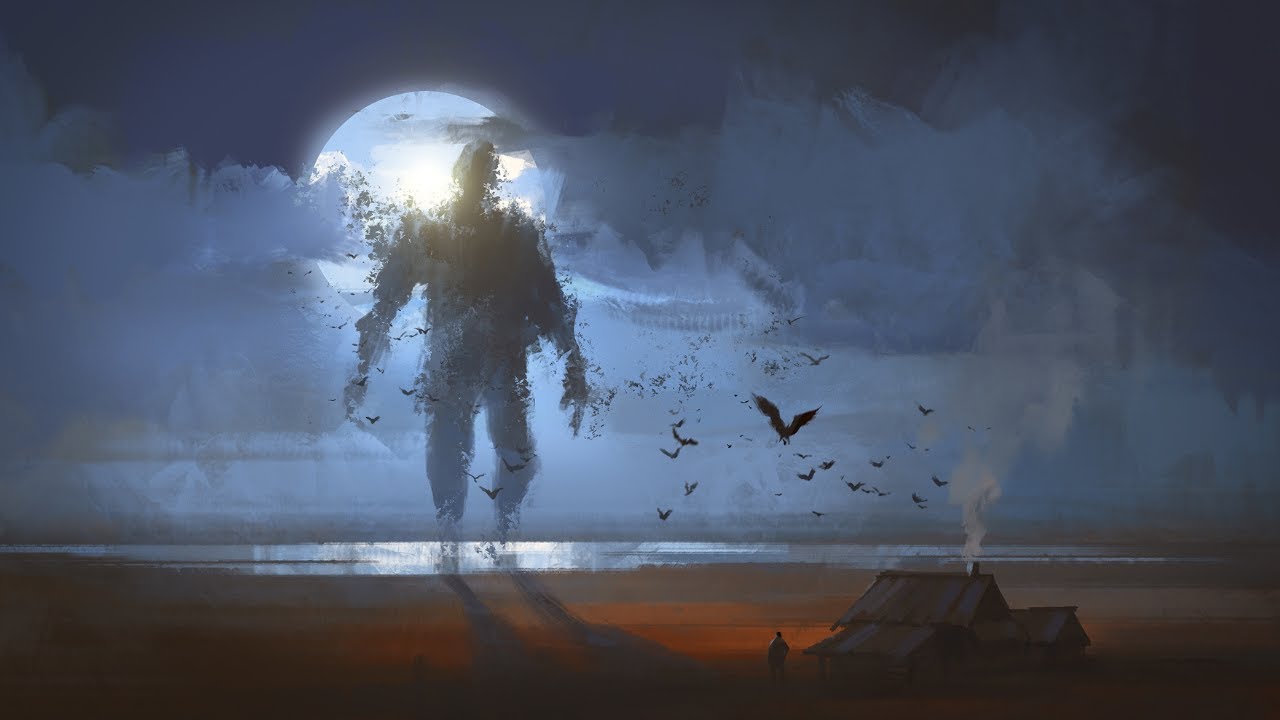
 Responding to a listener's question about stone-giants in The Hobbit and more generally, Julia Golding, and friend of the OCF, Jacob Rennaker take a deep dive into all things gigantic. Did you know that ent originally meant 'giant'? Is there something about elemental giants going on in Middle Earth? Taking in Greek, Norse and Celtic traditions, as well as folklore, fairytale and fiction, we wander far and wide in the land of the giants. CS Lewis and Charles Williams take a different approach and we get to discuss these in-depth, waking Father Time to end the world. Last we have a look at our favourite contemporary versions of giants, ranging from transformers, Harry Potter, Marvel and DC, with a nod to Roal Dahl. It is a gigantic subject so will come in two parts!
Hello and welcome to MythBakers. Now this week's episode is a bit different because we're actually responding to a listener's question but more about that in a moment. My name is Julia Golding and I'm the director of the Oxford Centre for fantasy and also a full-time writer. I sort of juggle the two roles. And today I am joined by a friend of the Oxford Centre that is Jacob Rinnaker. Now Jacob is well known to us as a Tolkien scholar but he also has had a little job shift since we last spoke so perhaps Jacob you'd like to introduce in brief your new role because it's very fascinating from a fan's point of view. Yeah so I'm working for Robin's Berger that does publishing in children's books, games, puzzles and whatnot so in a lot of what they deal with. If you've seen the villainous board game they have like Disney villainous Marvel villainous and forthcoming Star Wars villainous. They have some games. They have a forthcoming actual Lord of the Rings puzzle book game that is tremendous. There's some serious care that's been put into making this so I don't know if I'm allowed to see that. I think it's been announced publicly if not hopefully they're not listening but there's something for this particular group to look forward to coming to stores near you sometime within the next year. Yeah that suggests another theme for us one day which is about these crossover products because of course it's famous that Star Wars for example made a fortune from its toy version. So this sort of world where it comes out of a film or a book or whatever and becomes like a whole world and cosplay and all the rest of it is fascinating. Anyway so what was the question we were asked and why have I brought Jacob back? Well we got this rather cryptic message from a reader saying what about the stone giants in the Hobbit? They're really wild and I thought about that for a moment and I thought yes you are absolutely right what about the stone giants? So if you haven't read the Hobbit for a while they don't really impinge on the story very much. There is a sequence in the Peter Jackson film which goes on for quite some time with the sort of mountain rock people taking shape and then throwing stones each other in the Hobbit and the dwarves. They're all sort of at risk but actually where do they come from? I went back to the book just to check and it literally says oh watch out they're the stone giants they're bad news they're throwing rocks. No sort of sense of where their backstory is so Jacob do you have a theory where the stone giants actually come from? Yeah that's funny so I did did some after thank you dear listener whom everyone for that question so that got me poking around and yeah so with the Hobbits interesting like you said that they all learnly kind of mentioned there as kind of a backdrop right that and they're mentioned in kind of the same breath as this really evocative imagery of two storms clashing and so they kind of seem to be almost equated synonymous with these kind of elemental you know grand almost cosmic forces you know world bound cosmic forces and they yeah they don't they don't appear again there's other in in the Hobbit itself there's a few other passing references to giants that aren't stone giants right so this kind of this kind of you know the descriptor of stone in stone giants just you know only appears here and I think I can't I couldn't find anywhere else in Legendarium where stone giants were singled out but giants here within the Hobbit itself you have you know passing references to giants like you know Bilbo wonders if this giant boulder that he sees in a stream was maybe thrown there by a giant at some point but nothing is kind of fleshed out there and blood orthon says you'd like to find a more or less decent giant so there's kind of a moral dimension you know there's decent versus indecent I guess giants but largely these stone giants kind of seem indifferent right they're so massive in scale they're they're not concerned with you know they don't seem to notice Bilbo and company and even if they did who knows if they would care about these little you know kind of minuscule creatures so it's so you do I know and then this is and we can go into this perhaps a little bit later I'll wait for you to read on this in in Lord of the Rings the idea of giants and how that kind of develops over the development of Lord of the Rings specifically as a story but it within within the world of the Hobbit it's this is kind of a almost a flash in the pan you just kind of see this as a backdrop for for this kind of adventure setting with like you said that they don't play a significant role in the story the development of the story rather than to provide some sort of larger backdrop for the adventure right against which the adventure is happening yeah I mean they have the plot point of driving the the Hobbit and the dwarves underground I mean that's that's what the purpose they serve is just skate from the elemental creatures they then get tangled up with the the goblin so you can see you know you need exciting exciting turn in the journey to drive the the dwarves somewhere they don't want to go but I suppose there's also an association here as you mentioned with the storms of the elements and it made me sort of connect it with the later iteration of a sort of sentient mountain because in the Lord of the Rings they have or in the fellowship of the ring they have the passage up cadras which is abortive because of the attack of the weather which seems like a a return in snow to the idea that somehow the elements can in a neutral not exactly neutral but in a way that isn't involved in the the battles of elves and men can turn against travellers and there seems to be some sort of correspondence there but I think just looking at their presence in the Hobbit I mean the Hobbit is a less tidy book in terms of the legendarium than the Lord of the Rings so for example there is like the random reference to is it the smog dying like a screech of a steam train you know there is the it has a more storytelling awareness of our world element to it and it has a more nursery feel so it could be that there are elements that are just chucked into it to excite to the reader which don't have so much of a backstory but I do remember reading that Tolkien thought he only had one reference in all of it which he hadn't actually sort of plugged in properly and that was the the reference about the queen and her cats that comes in Lord the Lord of the Rings somewhere I think Aregor mentions of past Queen and no doubt Tolkien went back and you know worked out what that meant but I seem to remember him saying that was the only thing that wasn't connected so maybe there are connections with the giants that we are missing so let's dig a little bit more so let's think about the giant that figure in sort of world myth before we come back to Tolkien and see as Lewis and people so thinking back to the sources of giants I came up with two main sources which I felt influenced Tolkien and also see as Lewis and that was the Greek version and the Viking version I don't know which one do you feel you want to address first have that one of them maybe so I yeah so either one I went on a kind of deep dive into Norse okay that's earlier it just kind of went down the Norse the Norse the Norse rabbit hole but the Greek you know Greek Greek is easy is well I think there are a lot of similarities right between Greek and Norse mythology in terms of giants and kind of the primordial nature right so do you want so I think Greek could be less or probably take a little less time do I want to do Greek first let's do Greek let's go Greek Greek okay yeah so yeah so right so you have the the the Greek giants are children of Gaia and Uranus and depending on which you know which kind of founding mythology you're reading they're either coming from when Uranus was castrated right they kind of bubble up from the blood from Uranus from that or they're natural born to Uranus and Gaia depending so you know some of the the most massive largest elemental figures there they're you know even side by side with the gods or in some cases you know seem to be in a a grander scale in some sense but they're largely right strong aggressive and you have ultimately a kind of battle for power between the Olympian gods the Gigantomaki which right the this this massive battle between the Olympians and the giants and the Olympians end up winning and there's sometimes the same as Titans no this is a difference yeah yeah so giants so these giants in right and in Greek literature broadly speaking and this is you know terribly reductive but giants can be large but also they don't have to be so some people that are referenced as giants aren't necessarily giant size wise and in some instances appear to be you know kind of like mythical kind of like half like some sort of divine mythical creatures but not necessarily you know like 40 feet 50 feet tall they could be smaller so but that's in and kind of like the later literature and how they're dealing with quote giant so I think typically I think of like the psych like cyclops and say like the Odyssey as that's kind of what I picture is as kind of being a giant but they're of course like slightly separate related but I think slightly separate stream it just all it all gets muddled and muddied when you're looking at all the literature together as a whole right because each of these authors is kind of taking a different piece of this and running with it so yeah so largely though I think when when you're talking about earlier giants the earliest giants that are battling the Olympians and shortly thereafter they're just kind of like brutes and almost seem to carry this kind of symbolic weight of chaos right so the Olympians are these gods that are bringing in you know reason rationale order to chaos you know disorder barbarism right and so that's kind of how sometimes it's used with later authors referring to this story of the Olympian gods versus the giants is kind of in essence representing this greater idea of civilization versus barbarism or Plato even references this as you know the giants kind of representing base materialism or like materialistic ways of looking at the universe whereas Plato of course is the correct way of looking at it which is more abstract right looking at some sort of transcendent realm and that's where the Greek gods are representing so in at least in in Greek literature it's kind of the idea the images are kind of abstracted and kind of taken to symbolize a battle between order versus chaos civilization barbarism reason rationale and just kind of you know base materialism in some so that's kind of the Greek yeah largely kind of why I see you when I read it so and obviously the inkling authors all raised on Greek stories in the in the schooling system of the day and I think one of the carry forwards there which I can see is the sense of them not being the the sharpest of creatures and I think that's particularly you can see that in CS Lewis's giants he has a number of giants some who are more benign than others but that seems to me that he may be drawing on more of a Greek tradition so let's do the north where I suspect I can imagine Tolkien's finger prints are slightly more visible I do remember that from from the very foundational myths of North mythology the physical world is made from the body of a giant right so yeah yeah yeah that's yeah so yeah yeah yeah yeah what do you have these overlaps really interesting parallels in Mesopotamian mythology with the creation with the Babylonian specifically creation myth but in when in in Norse you have right so yeah Emeer Emeer please somebody's going to I daren't I apologize to anyone who does to everyone who does Norse in any of its incarnations but right so that this kind of primeval giant is the first being that actually exists in in the world right that's that's kind of formed from drops of water when the ice of right niffleheim meets the heat of muskleheim so you have again apologies for pronunciation but right so it's kind of in the middle of the you know extra hot extra cold in the middle where that meets the watery area this giant kind of just develops out of so and then from his person or its person kind of develops kind of grows other giants so that's what you have that happening and kind of at the same time elsewhere meanwhile you have the original gods being created as well so they're kind of two different tracks of of of kind of origins of for the gods like Odin etc we think of more traditional gods Thor etc and then the giants that are kind of born directly from the body of this initial being that is the first to exist in this in this world so yeah they have a way backly out don't they those gods in the giants right well they yes they're battling it out and they the gods that are the more kind of like human like gods end up you know slaying this primeval giant and his blood drowns all of the other giants except for one family that survives on a little old boat and then you know survives and it's the the fashioning the gods fashion the world from this you know deceased gods body and set up from the brow of this this primeval god mid guard right which literally is middle earth uh and it is meant to protect in some ways the inhabitants of mid guard from these giants who they're trying to push off to the periphery okay so we've got a wide range of giants there and just thinking about the sort of trickle down effect when we look into the sort of world of medieval stories another fascination for talking and Lewis in particular um you get versions of these giants in new forms coming forward um and I think the one that obviously we know is of direct influences going in the green night the green night is a giant but he is a giant in the sense of the stature of one of the Greek ones he's not that huge but he's not did he's not dim uh he's elemental his clever his uh a force of nature um he's magic he's scheming um so he's an absolutely fascinating figure I think as a sort of interpretation of the giant as the other that threatens the worlds of the court and the night um civilization he's offering a different kind of civilization uh in his green chapel um so I think that's a that's a really fascinating giant and probably my favorite of all the giants because he seems to have so many aspects to him yeah I agree no that's and yeah the going in the green night is you know it's a fascinating story in and of itself right and uh and when we knew yeah we know of course that you know Tolkien specifically there's there's actually a letter uh of Tolkien that's up for uh auction right now for anybody who's it's it's it's currently it's it's there you can get it right now uh it's it over six uh six thousand us dollars uh right now um but uh it's a letter to a fan uh who's writing about Lord of the Rings hadn't quite finished reading it but what they had read uh what had impressed them so much they wrote letter Tolkien wrote letter back uh and he says that he's right talking about the creation of uh middle earth and he says right naturally in digested form I am indebted to the myths and legends of literature but most specially to those of England and Wales uh for Gaelic of Ireland and Scotland I have a great liking so I think yeah so definitely looking at going in the green night there's there's a special place in Tolkien's heart for this kind of Celtic Gaelic um version of of giants as it come there and I think that's a valuable insight into and especially the the right do we have the green uh the green night and some parallels some interesting connections to giants and ants uh in Lord of the Rings so hold hold hold the thought about ants because you made very interesting point about the actual meaning of the word ant um we need to properly recognise um the Mabinyogin and the Irish legends again giants causeway that's uh in for those of you who aren't familiar with the the sort of geography of northern Ireland there's a fantastic world heritage site called the Giants Causeway which is created by um cooling basalt from a bulk an ancient volcano and it's called the Giants Causeway because it looks as though it's been made by a creature a giant um and it links up geologically to fingers cave over in in Scotland so there there's a huge presence of giants in the landscape that is um all over England Scotland Wales uh Ireland um and giants cut into chalk surfaces um you know everywhere and um any large structure is often named after a giant or a hero who is treated like a giant um so heroic people of that stature so there's a very rich tradition there and all of these masses of uh influences are all going into what talking called the cauldron of story and being stirred around so let's look at the specific mention of ent because this word isn't actually Tolkien's word is it no no it's right it's an old English uh often translated as giant itself so ent and giant uh in old English uh are compared to be synonymous or have a close affinity to to each other um so yeah so it's really interesting looking at how you know the development of Lord of the Rings the different drafts that in early drafts you have references to Giants um not frequently right so it seems to after the Hobbit as he's putting together Lord of the Rings you still have some references to Giants but upon successive revisions they kind of get weeded out um and even treebeard himself right so this idea of ent's treebeard in earlier drafts is described more or less like a giant who's kind of dressed in green and are wearing you know male that looks like leaves and he has a beard you know uh like branches but um and then it's described as having his own court with you know some sort of courtly retinue right um the who stand tall who stand like young trees so again this is the saying that they're standing like them not so there's some ambiguity there are they actually trees but then as it kind of develops it seems like Tolkien is taking you know what was happening in in what he was doing with the idea of Giants this kind of you know generic idea of Giants as these large oafish creatures that you really get a better sense for in the farmer giles of ham uh the the giant there for Tolkien is kind of this explicit you know just dumb brute uh whose death and partially blind and just kind of bumbling um to then and these passing references in Hobbit that seem to be connecting it to this wider world of children's you know stories about Giants and Knights battling Giants and that sort of thing he then kind of takes that and it seems like he's trying to make it his own giving his own personal kind of internally consistent idea of idea of Giants and it seems at least in my my reading of of kind of all this you know preparatory material and and multiple drafts that he's kind of taking this idea of Giants and developing that within the legendarium into ends in some way what one aspect of Giants kind of becomes evolves into uh into ends um okay here's a theory here's a theory Jacob yeah um if in the Hobbit we've got um stone Giants hyphenated stone Giants yeah maybe what we've got in lot of the rings the two towers is wood Giants yeah um so you can imagine there's a sense of he's working through the elements here yeah it's a very elemental landscape that we're moving in um so you can have that is that's where we're going here um with it you could yeah because because you do have in you know um uh book of lost hails there's references to you know melco uh breathing Giants in the earth along with other monsters with the wicked dwarves ogres um but that doesn't really kind of he doesn't follow that trajectory it seems so we have Giants mentioned in some of the earlier material but it doesn't it doesn't seem to survive as he's kind of working and reworking it that he really seems fascinated with like you're saying that perspore that kind of dimension of Giants the elemental Giants that are you know kind of the green the wood uh and follows those and develops that because he he says you know that he doesn't remember creating treebeard and so this is something that kind of seems to be happening kind of organic organically for lack of a better term right right right right right but but it's but he he didn't see Tolkien didn't see himself as kind of like from whole cloth kind of creating consciously this this entity that is treebeard as an ent but then it kind of just kind of grows uh into into this idea which is yeah which which I find fascinating because it is so directly tied to the landscape itself right the Tolkien was so particular about and he writes you know so movingly about uh just in describing he obviously cared about right trees landscape the world and the ends kind of become this vehicle for personifying giving a voice to the land right um to nature uh and that's yeah it kind of grows and then it becomes something that's distinct that we see like you're mentioning with going in the green night that we see the green night kind of having a tie to the green right the elements of wood kind of in in particular and so this is I think him perhaps you know Tolkien leaning a bit being drawing drawing a bit from that but then kind of amplifying it 100 fold uh in his own in his own the petri dish that is uh you know middle earth and the the broader right legendarium I'm getting a bit carried away with my theory here but I've got another one to offer you keep going keep going I love it yeah so we got Stain Giants and Wood Giants um the Balrog is arguably a fire giant because it's described as a sort of derivative flame isn't it um right yeah yeah it's one of those sort of elements that's created by the original um melco dark lord the the the super badgy so where we've got that that's earth um fire and uh wood we're doing quite well on our elements here right you can throw in the eagles if you want to do you want to do eagles you can you can go ahead and do that if you want for okay lose your connection to right so the air right that they're uh right in their manways you know kind of the specific you know a finity for for a manway who's largely in charge of right the kind of the realm of air um so I think that I think that works I think you're under something that's that's for the next academic article um not I write those anymore so I think what's really interesting is that in some ways another argument here is that everything but hobbits are giants in order the rings because our perspective our point of view is of the small so it means actually that the way it's positioned is that um we are going out into a big bigger world a world that doesn't care on understand the halfling the hobbit so even the men that we meet are a bit like giants to the um the hobbits I mean you see that I've seen the film with all the discussion about how they did the force perspective and the the doubling to make this clear but you've got the sort of oh fish giant people in Bri and then you've got the sort of uh regal giants of the sort of gondor people and people of stature and the elves so you could say that there's this theme of perspective that runs all the way through Lord the Rings which reminds me very much of another literary antecedent um which is perhaps one of the first to make real use of this perspective and that's called scolvers travels which has the two worlds where Galover and one place is a tiny and in another place he's the giant so it feels a bit like that to me that they're talking's very aware of just how big or small you are in a fantasy world because that's really hard to be a giant isn't it right yeah yeah yeah you do yeah yeah absolutely absolutely and then you have yeah and you have nuance added kind of to that or kind of taking in different directions and I think and that's where yeah the the giants kind of being used as metaphor uh you see that in in some ways in I think here in in in Lord of the Rings definitely but also in the Chronicles of Narnia and some of C.S. Lewis's other writings where the idea of giant as as metaphor for something different even into sometimes contemporary literature uh which we can talk about shortly yeah let's turn to um Narnia so just off the top of my head I could think of there may be more I could think of three giants um there's the first one that we meet in Narn the Witch and the Wardrobe who is turned to stone previously um and his giant rumble buffing causing name and he's the one who borrows the hank chiff to mop his brow that sort and he's obviously in the tradition of gentle but bit dim giants and then the next one I could think of was the one who stands as a marshal in the fight between Peter and Miraz and he is wimble feather who seems a close cousin or descendant of the one from line the Witch and the Wardrobe and then there's interesting giants and the ones that connect most to the stone giants of the hobbit are the ones that pop up in the silver chair um there's a lot of uh so going in the green night in this as well with the wintry setting and the christmas feast and all of this but there is when they're first introduced they are behaving very much like the um giants from the hobbit because um we actually get the giants throwing stones um and uh Jill who's called scrub uh says are they aiming at us? No said no said puddle glum we'd be a good deal safer if if they were um these giants are terrible shots terrible aim terrible shots um doffers in the sporting world of nania but then of course the children then go into the castle where they're treated as uh guests but it turns out a bit like a jack in the beanstalk and sort of scenario very much that kind of fairy tale feel where they realize that they are the the prime dish not the not the guest for dinner they are dinner um so that world to me seems as though cs Lewis is drawing on fairy tale giants really um but the stupidity the silliness comes from a sort of um easily tricked element comes from the sort of uh the cyclops type giant says sort of bit of greek in there as well have i mentioned them all have i missed a giant thank you for listening to part one of this week's podcast come back next week to hear part two thank you for listening to myth makers thanks for listening to myth makers podcast brought to you by the oxford center for fantasy visit oxford center for fantasy dot org to join in the fun find out about our online courses in person stays in oxford plus visit our shop for great gifts tell a friend and subscribe wherever you find your favorite podcasts worldwide