
Cultural Takeover? 3 Body Problem and Other Adaptations

 Apple Podcasts
 Amazon Music
 Spotify
 JioSaavn
 Castro
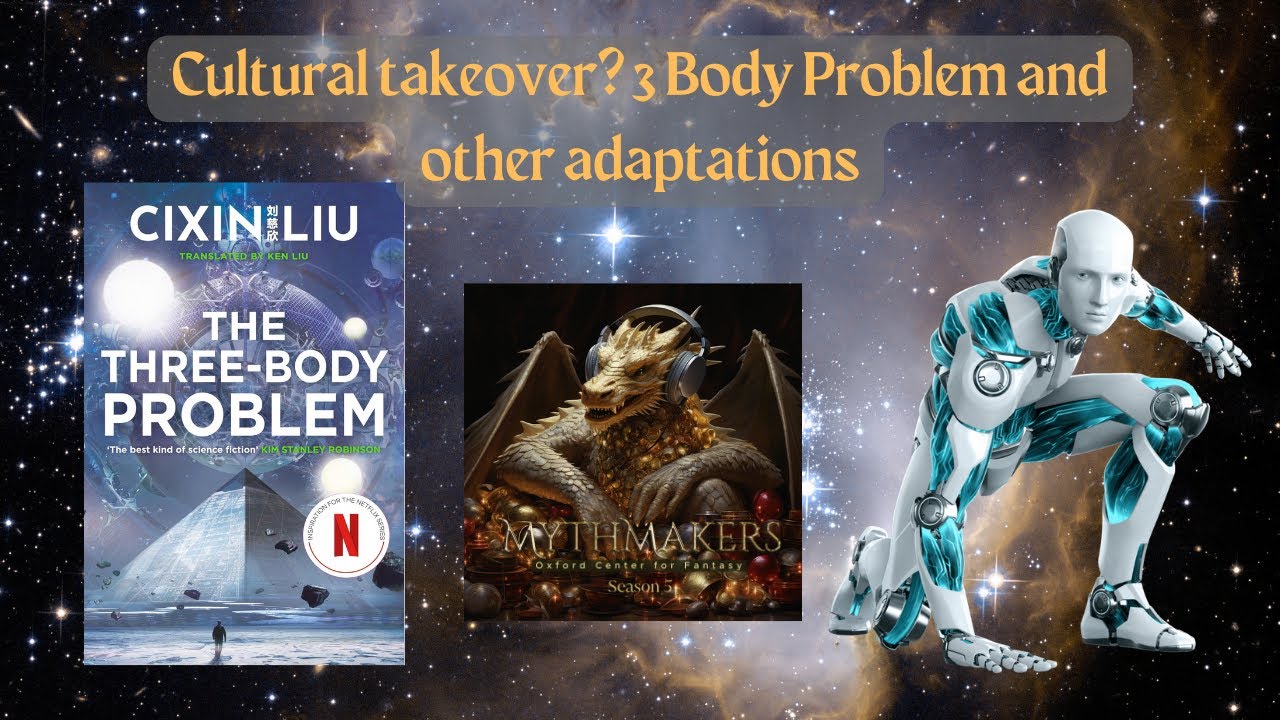
 Netflix’s 3 Body Problem has raised some questions as to whether or not it is right to move a story’s adaptation to a different country. Is it cultural appropriation or a justifiable reinterpretation? On today’s episode of Mythmakers, we’re taking a journey through Blade Runner, Matilda, and Wonka to HG Wells. Join the discussion as Julia Golding considers the pros and cons of moving a story to another cultural context.
For more information on the Oxford Centre for Fantasy, our writing courses, and to check out our awesome social media content visit:
Website: https://centre4fantasy.com/website
Instagram: https://centre4fantasy.com/Instagram
Facebook: https://centre4fantasy.com/Facebook
TikTok: https://centre4fantasy.com/tiktok
Hello and welcome to MythMakers. MythMakers is the podcast for fantasy fans and fantasy creatives brought to you by the Oxford Centre for Fantasy. My name is Julia Golding. Now I'm an author and also a director of the Centre and today I wanted to talk to you about the three-body problem because there has arisen a problem quite fittingly with the three-body problem and this is about the question that's out there, absolutely in an article in the Times and an article on Forbes saying that the many people are angry particularly over in China that the adaptation has moved the novel away from its Chinese roots and made a more global cast and one of its obvious changes is a lot of the mystery, well the mystery moves on to Oxford and London, places like that which for a Western audience are more familiar. There has of course been several other adaptations of this novel which is I've also read the novel and from the adaptations of it in China which I've not seen. I think there was a film made that never came out and then a TV series which apparently was very good but I haven't seen that and it got me thinking about what happens when we do adapt a much beloved novel like this and we move it sideways is it successful or not is it are we allowed to do that kind of thing or not or are the critics right that moving such a book like this away from its Chinese roots is somehow I suppose the word we've heard before is cultural appropriation or dishonoured it in some way. So rather run straight at the three-body problem I thought I would just do a little kind of two around the universe first which if you've read the novel is quite appropriate because things do not move in a linear fashion. So let's look at the different things that happen when an adaptation of a fantasy novel in particular moves the location. Now it could be just quite a sort of simple thing where you change one American city for another for filming reasons. I'm not talking about that I'm talking about big shifts and so I think there is one thing which is really to be encouraged and that's when an adaptation takes the source idea and spins it off into something completely new with a whole different kind of tone. So in this adaptation your source material it's not really an adaptation of that it's inspired by which I do know is how Netflix have described on the front cover of the book that inspired the series which gives you a little bit more room. So what happens when you do that? Well you can get some amazing things that come out of that and the one that immediately came to my mind was Blade Runner. Now if you've read the original short story Do Androids Dream of Electric Shape it's absolutely delightful it is also very funny it has much more of a sort of I don't know almost Hitchhiker's guide to the galaxy feel to it because there are absurdities like trying to hide the fact that whether or not the pet is real or not because there is a premium on real organic creatures as opposed to the Androids that are proliferating through society so funny things like that tonally very different so it does actually also move location in that in that case I think technically it's moved by look at my notes here it's moved from move to LA from San Francisco not big shift for those of us outside the states but that's not the important thing that shifted it's the freedom that they thought well here's a really interesting idea here's an outline of a story let's go make something very different with it and so both the original story and then the film are both excellent in their own categories and that's great I think that's really creative and it means that the filmmakers have exploited their craft the full and I'm sure that the source material doesn't suffer as a result what about so that's one one category where the change is so big that is something new emerges and in that case there isn't the it still remains within America so you don't have that cultural appropriation problem but this is where it gets a little bit tricky isn't it is when the change is made to make something more accessible however that is understood for an international audience and when people say an international audience they very often mean a US audience who have well they are a dominant market obviously and where lost the funding comes from so you can see this particularly in children's films so if you read the Matilda books roll diales obviously from a sort of British sensibility when you get to the Matilda film like the 1996 and the more modern update which is how musical isn't it you get to sort of unidentified America it means that the accents are all over the place some of the characters of British accents some have American accents it becomes this sort of everywhere the same is true in the prequel of Wonka that came out this Christmas which exists in a no-wearsville it feels more American but it could be a bit Paris um the accents are very mixed and in a way it's saying don't worry about it just understand it to be some kind of western town but it does mean the specifics of where the story came from in Waldole's imagination are lost is that a problem I don't know I think that it's under valuing maybe the understanding of the audience the same team who's made the Wonka film also made Paddington and Paddington never forgets that is a London-based story I guess that maybe because the really when this is sort of you know trying to follow the thought process is here the most dominant film in the Charlie and the chocolate factory universe is the one that's Starding Hackman so you've got a sort of Americanization back in the 70s which has kind of fed through to making that like the the place most people meet it rather than the book so you can see how the shift has come and of course Charlie and the chocolate factory isn't specific it does have a feel of every city anyway so is any damage done probably not I think that's fine but I would also want to sort of do a shout out for those films which actually lean into where they're from for children one of the big decisions made when they were thinking of the Harry Potter films of course was they were going to cast and this was a JK Rowling lead initiative they wanted to have a sort of British cast British children playing the main roles and it seems as though the world has accepted that without struggling in fact they've almost enjoyed the weirdness that has come out of the idea of a British boarding school which isn't immediately understandable in other education systems so sometimes you can lose what actually is charming about a work if you do take it away from its roots the sort of de-racination effect but maybe with films which doesn't which are floating free in a sort of magic world like Wonka and Matilda yeah maybe we can live with that I don't know be interested to hear what you think of it do leave any do some messages and let me know what you think and then we've got the kind of takeover which does feel feel a bit more like an accultural appropriation very much to make the American culture dominant not always but I was thinking in a non fantasy context you remember there was that very popular psychological thriller called Girl on a Train now if you read that in the UK it's very much a London commuter book probably was written for that market when it came to be made into a film though the main character think it's Emily Plunt isn't it though the main character remains English it's moved to I think New York I don't get why why it wasn't necessary for the story and it does seem as though it's almost as though well we maybe it was to make it cheaper to film I don't know but it seems as though sometimes don't worry America is what everybody understands feels as though other English speaking cultures are being sort of pushed down yeah it's weird isn't it though I have seen it the other way around I was recently watching it came out a couple of years ago now there's a thriller that's based on the the Harlan Coban series and it's called For Me Once and it's set in the UK I was watching this and the main character there is a ex-military female soldier who has gotten to trouble and left under a serve cloud and then we've got this psychological thriller about her and members of her family being bumped off as I was watching it and it was particularly her particularly her relationship of gun with guns having a sort of very upmarket gun safe in the house being really keen on the whole carrying lots of guns somebody like that in the UK is really strange really unusual really stands out but it wasn't treated as being a particularly problematic thing and then I went and had a look at where the story comes from and the original setting of the story was America where indeed rules are different about gun ownership it doesn't set you apart it ended up being a kind of red herring because somebody was such a sort of gun culture gun fixation immediately felt it gave a motive which wasn't actually an original story so it skewed the story which is important in a psychological thriller when you're looking for clues so yeah it can really change how you receive the story when you find that the furniture around it has been moved so very oddly what's the word it so disorientating and as soon as I found out oh yeah this really was set in America originally it kind of all fell into place so I wonder why they chose to make it in the UK I imagine that was to do with some sort of deal about where it was cheapest to film but it was odd really odd so let's turn to what I was thinking about which is the three-body problem so what has happened the original novel was set in mainly in China and the sort of plot this it's a very complicated novel to follow by the way so I'm not going to attempt to explain the story but there is a sort of phase that's set in the aftermath of the cultural revolution that remains in the Netflix series and then there's a plot about a number of contemporary scientists are being bumped off that's a bit that's been moved into a Western world into a British world in fact that's a bit that is causing the problems now one of the things that's lost from that of course is there's an added interest in the novel of how in the Chinese society that has recovered of sorts from the cultural revolution how it goes about investigating scientific what looks like self-termination so there's like suicide and so it was actually quite interesting reading a Chinese detective story which is basically what it is with a fantasy element that is lost though the main detective in this is of a Chinese origin I'm just looking at yeah Benedict Wong who I think I think he's been in the Marvel films so maybe he's based in America anyway his so they have kept some of the ethnicities if not the origins if you see what I mean um I actually as as a western person for whom this was probably intended one of the many audience I actually found it helpful as much as I enjoyed the novel I found the novel quite a tough read I had to really concentrate it was actually helped me understand the scientific story and the different scientists with this simple change to basically my backyard but I can see why a Chinese viewer might be annoyed I'm just hoping that the adaptation in the Chinese language that was made is good enough for them not to feel they need this and it might have been a decision that in order to make this excellent story and there's two more books following on which hopefully they'll also do that if we do it this way we'll get the global audience who might not go for a slightly more difficult subject matter so I find myself thinking actually they've done a good job and there is some ways in which they may have actually even improved on the novel which sometimes happens in terms of the relatability of the characters there was a certain and I was talking about this with my son who told me to who was one who put me onto watching this and we were discussing the characters in the novel the characters are quite cold it's the sort of lack of familial warmth and friendship it was a very sort of suspicious world and you by moving it to the context they have in the UK it's much more a group of friends who aren't perfect to any means and they all have their own little backstory but they are sort of warmer and you can relate to them and I think and sympathize with them and that isn't to do with the fact it's moved from China to the UK it's much more to do with what the characters have been warmed up they've been made more relatable with more love between them I think is where it comes down so basically they love each other which is nice because that was a bit lacking from the novel so in this case I would say there is a defence to be made by Netflix if they care to do so which is we know there's been a good Chinese version this made we're not trying to remake that and we are actually thinking that this is something that could bring this story to a wider audience by reinterpreting it this way and taking our slice through the material and there are times when you just have to say well the book is one thing and the adaptation is another it's trying to do something different but like the argument about Blade Runner that you may actually end up with something which is better in its own category so the novel can be a good novel and this can be a good series adaptation and just to say of course that this whole idea of cultural appropriation let's go back to where we started with this this is something as old as old as time we've been doing this with the stories of other nations forever just think of the number of reinterpretations of greatness we've talked about Percy Jackson in the last episode but the retellings of old stories Shakespeare all his plays are other people's stories which he's reimagined and reworked and yeah that's good because it's created something new and vibrant in his own voice and in more recent times there has been this shift to a sort of culturally dominant dominant America just think about what happened to the stories of HG Wells so I'm going back to the beginning of cinema originally HG Wells wrote in a British context because the British Empire were you know top dog at that time and as the the century of cinema really got going and you've got people making HG Wells stories such as the time machine which has been in 2002 with a not a London but a New York setting and then you've got the versions of War of the Worlds it's been moved to America and that in a way is an interesting I suppose it shows us the cultural moment we're living in so by reworking and adapting these stories we find out more about how we frame and shape our own moment so that's what I was thinking about the three-body problem it is a problem when we take material but I assume they've taken this material for the three-body problem with the full consent of the author because they are living it's not so very old novel so they would have signed on the line that they're okay with this it's not like it's been ripped away from them and shifted without any say so so as long as there's consent from the person who originally thought up the material I think actually this isn't a case of the wrong form of cultural appropriation I think is a nice form of cultural reinterpretation and I look forward to watching further series of three-body problem anyway I'm sure there are many views on this subject particularly if you're passionate about the novel you may disagree with what I've said because you've been missing things in the series which you love from the novel but do let me know because I think this is a very lively ongoing debate about how we use this cauldron of stories that the world gives us and what we dip in and take out as that's what how Tolkien phrased it thank you very much for listening thanks for listening to myth makers podcast brought to you by the Oxford Center for Fantasy visit Oxford Center for Fantasy.org to join in the fun find out about our online courses in person stays in Oxford plus visit our shop for great gifts tell a friend and subscribe wherever you find your favorite podcasts worldwide