
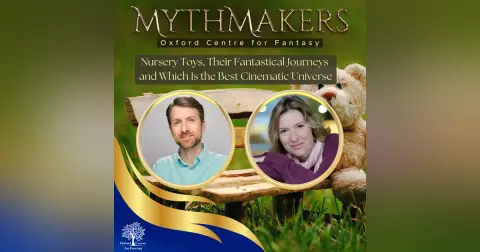
Nursery Toys, Their Fantastical Journeys and Which Is the Best Cinematic Universe

 Apple Podcasts
 Amazon Music
 Spotify
 JioSaavn
 Castro
 With the King and Queen of the United Kingdom heading to the US this week, Julia Golding and Jacob Rennaker begin today’s episode of Mythmakers with a playful look at soft toy diplomacy and the source of many fantasy stories in nursery toys—including a bonus Tolkien connection.
From there, the conversation turns to the thorny question of which cinematic universe is the best? Expect strong opinions as Julia and Jacob weigh the merits of Marvel, DC, Star Trek, Star Wars, and amongst others…
(00:00) Introduction & Episode Overview
(01:12) Soft Toy Diplomacy & Winnie-the-Pooh Legacy
(03:00) Toys in Fantasy: Childhood Stories & Lasting Themes
(05:20) Imagination, Play, and Growing Up in Toy Narratives
(07:40) Worldbuilding in Winnie-the-Pooh vs Other Stories
(10:00) Toy Stories as Cultural Reflection & Social Commentary
(14:40) Play as the Foundation of Fantasy Storytelling
(18:40) Defining the Cinematic Universe
(23:30) Marvel & DC: Strengths, Weaknesses, and Evolution
(30:00) Star Wars: Expansion, Innovation, and Challenges
(36:30) Star Trek vs Star Wars: Themes and Cultural Impact
(44:30) Personal Preferences, Nostalgia, and Final Verdicts
(57:00) Closing & Transition to 1990s Fantasy Discussion
For more information on the Oxford Centre for Fantasy, our writing courses, and to check out our awesome social media content visit:
Website: https://centre4fantasy.com/website
Instagram: https://centre4fantasy.com/Instagram
Facebook: https://centre4fantasy.com/Facebook
TikTok: https://centre4fantasy.com/tiktok
00:00 - Introduction & Episode Overview
01:12:00 - Soft Toy Diplomacy & Winnie-the-Pooh Legacy
03:00:00 - Toys in Fantasy: Childhood Stories & Lasting Themes
05:20:00 - Imagination, Play, and Growing Up in Toy Narratives
07:40:00 - Worldbuilding in Winnie-the-Pooh vs Other Stories
10:00:00 - Toy Stories as Cultural Reflection & Social Commentary
14:40:00 - Play as the Foundation of Fantasy Storytelling
18:40:00 - Defining the Cinematic Universe
23:30:00 - Marvel & DC: Strengths, Weaknesses, and Evolution
30:00:00 - Star Wars: Expansion, Innovation, and Challenges
36:30:00 - Star Trek vs Star Wars: Themes and Cultural Impact
44:30:00 - Personal Preferences, Nostalgia, and Final Verdicts
57:00:00 - Closing & Transition to 1990s Fantasy Discussion
Hello and welcome to MythMakers. MythMakers is the podcast for fantasy fans and fantasy creatives brought to you by the Oxford Centre for Fantasy. My name is Julia Golding and I'm joined today by my friend over the other side of the Atlantic, Jacob Renaker. So Jacob it's lovely to see you. Great to be here. So we've got sort of three main areas of conversation today. The first wall is breaking news. We need a little chiron going down the bottom, don't we? But it's breaking news of a different kind than normal. And the second is we want to talk about what is the best cinematic universe. We're going to really duke it out here and argue for our best. And then we're going to turn at the end to a new series that we're going to be doing, which is to look at decades in publishing, starting in this case with the 1990s and picking out our top three fantasy reads and we'll be working our way back through the 20th century and see what we can find. Okay, but first of all breaking news. I need the, you know, that news. That's our music. Yes, imagine, which is that we're about to have a royal visit to America. The King Charles and Queen Camilla are coming for the American celebration of independence. And what is unusual and what caught my eye and is relevant for fantasy fans is that in the gift giving, Queen Camilla, who is a great sponsor hero of reading. She loves reading and she's behind any sort of national campaign about get everyone reading. She is bringing a very special character to be left behind in America, not Harry. It's actually rude because we are in the hundredth anniversary year of Winnie the Pooh, which can you believe Winnie the Pooh is a hundred years old. And the New York Public Library has a collection of A.A. Mills Sun's soft toys that were the inspiration behind the, what became Winnie the Pooh. So E.R. and Tigger and Kanga and all the rest of it. But they don't have room. And Queen Camilla has sourced a soft toy which would have been in the same shape as the original room to give to the New York Public Library collection. So they can have a complete set. So there we go, soft toy diplomacy. Now Jacob, that's all lovely. And I'm sure that'll be one of the less contentious high spots of this particular visit. But I was wondering as a result about how this whole idea of nursery school characters, nursery, you know, nursery soft toys has been one of those big themes in fantasy, which I've ever rethought about separately, but this gift has made me think about it. So do you remember any stories, fantasy stories growing up, which had this as the idea, you know, that the character's coming alive? Yeah, this is great. And I just want to say a quick word about Winnie the Pooh having read those with my child. I never, I don't remember reading the Winnie the Pooh series as a child. My earliest memory is kind of the Disney cartoon adaptation, which I know. So now I'm able to rectify that oversight. And it is absolutely holds up. Just terrible. Just so delightful. The voice is so strong. It is those laugh out loud, funny bits for adults and super engaging for four-year-olds, five-year-olds, and on up. So it's, yeah, it's, it certainly has left a legacy in terms of fantasy. A story that I was familiar with younger, the Velveteen Rabbit by Marjorie Williams, again, a toy, you know, inspired by a child's stuffed animal that then is so worn out. It then gets discarded when new, new toys come along. And it's kind of this quest of this animal who, who, who felt loved. And it's kind of, it is, it's surprisingly touching about the transformative power of love and how love can make one real by both like receiving and giving love. So Velveteen Rabbit was one, this kind of a, a sweeter softer one. One that, that really captured my imagination as a child was the Indian and the cupboard series by Lynne Reed Banks 1980. So when I was a child, so this is this magic cupboard that whatever, you know, toys you put in, you close it and open it up and they come to life and they have their own adventures. And so it's very, you know, very close to toy story with that kind of channeling. But this was you know, explicitly a magical cupboard that is imbuing these toys with with life. So that was something when I was a kid that I would loved reading the books. They did a film adaptation in the early 90s of the first book in the series. But yeah, but so my childhood I certainly had these ideas of, you know, of toys having a life of their own, having adventures of their own. And I feel like it's kind of what most children at least I did in my siblings and friends would channel when you have these these animals, these creatures, these toys. Then then you're taking them on adventures and you're voicing them and taking them in different places. So it seems, I mean, it seems to be something even, you know, cross culturally something, you know, children and their toys animating them and imagining what the life is like of this little object of theirs. So yeah, so that was kind of my, my childhood. How about you in addition to the way the poo were things that you see? Yeah, I was, so I, another one I remember from my, my sort of growing up days at school was a book called The Little Wooden Horse, which was like a horse on wheels that got battered and sort of broken down and almost rejected. So there's this theme isn't there, which the velveteen rabbit is picking up and toy story later on is picking up. You see idea that sometimes these stories about children's toys are about growing up, things wearing out. There was actually also a TV series, absolute classic TV series called Bagpus, which I don't know if it got to America. It was all of a post gate who was one of these sources for all sorts of wonderful children's programming and the idea is you've got this old cloth cat cat. He's a pink and white saggy old cloth cat who sits in the window of a curios shop and his owner Emily finds broken down things to bring to the shop and then as soon as she goes the animals come alive. So the cat there's a frog playing a banjo, there's a ragdoll, there's some mice who have a little song about mending things and they repair the item and it's sort of early upcycling and they tell a story about it, absolutely charming. So if you're looking for something really gentle for your child, I would highly recommend Bagpus. I'm sure it's available, but it's a similar idea that the animals have, or these stuffed animals have a life when your back is turned. So that's, but the thing about Winnie the Pooh is that it's not about the creatures are sort of moved out of being the move out of the nursery into the hundred-acre wood. So they have a whole world in which they are they're in their native in that world and that's where the adventure's happened and it's all about play isn't it and sort of jokes and the child can laugh at the characters Christopher Robin is more intelligent and you know he's the one they go to for help so it's a it's very empowering I would say for a kid and of course it taps into a level for adults too because there are certain archetypes. My husband once came home and said that they've done some management training thing where the training had been about describing different members of their team in terms of Winnie the Pooh and the gentle way of rather than saying you're bossy or you're you know you're over enthusiastic you say you're a bit like Tigger and you're a bit like rabbit you know who is the ear is the question yeah the there wasn't ear I know him well the one who would always say it's all the new horribly wrong so it's clearly tapping into something so you can try that in your next you know group building meeting that's a great idea but you mentioned of course toy story so I think we should yeah there's there's this idea has lent itself to the engine in the cupboard is very much like night at the museum don't you think right yes yes exactly yeah and toy story seems very much like the velveteen rabbit but perhaps there's a my American on this you can explain the connections you see between those am I right and think that yeah yeah that is yeah yeah very much so yeah kind of night at the museum is more of a Indian in the cupboard so you and Indian again American Indian Native American Indigenous folks that's so but the toys use have the you know the old cowboys and Indians shows that they would have and they all kind of like take a place in the American West that's the you know the the the righteous upright white settlers coming in and yeah right so that's where yes when this is going to say the Indian in the cupboard so this is you know it's being published in 1980 so it's being written and imagined much earlier than that with those kind of cultural ideas that it's playing with and so in some in some ways it's almost a way to work through some of those you know some of those cultural ideas through the form of toys right and that's what we're seeing with with toy story right so it's it's a film that's about you know toys playing with each other but like you said it's also something it's a kind of a locus to be able to to explore the idea of growing up growing out of things you even have you know toy story to talking about the speculative markets of you know toy you've been vintage there's so it's kind of a critique of certain different things with the new upcoming toy story was just talking with our child about this one you know the the villain is a tablet an electronic tablet that is you know children's attention is being pulled to this is their new toy and the other kind of tactile toys are kind of being left in the dust and and kind of so it's a way to explore imagination and children and in the you know competing entertainments for children and what those effects have on them from the perspective of the toys themselves which which is really interesting so I think yeah so they they become yeah yeah yeah a way to explore some of these different deeper things something that you said about Winnie the Pooh and the the the world itself that kind of sets it apart just really stood out to me the this the hundred acre wood becomes this kind of persistent fantasy realm and Christopher Robin whores in some of these other stories you know that there's the child in Indian in a cupboard you know the child is a major focus of that but Christopher Robin he's kind of he he's kind of intersects the story at certain points comes in but really it's about the adventures that these toys are having on their own but it's again like it's a second it's it's almost a secondary almost like portal fantasy or you're just kind of there and then the character from this other world is the one that's kind of coming in and intruding even though he's the reason for the being of this world and even yeah at the end of the you know Christopher Robin saga if you want to call it that with House of Pooh Corner and Winnie the Pooh that you know when he talks about you know kind of moving on and growing up and yet this world is still continuing to exist there's some yes there's some some really interesting things there in terms of building world building in terms of an entire fantasy world because you could have it like toy story that's entirely situated in our world and it's dealing with you know there are people there are toys there's there's a clear distinction between the two and the only place these these toys can explore is our world and so you have like a toy's eye view of our world it can be kind of a critique a satire exploration of our world but with something like the hundred-acre woods there it's like you said kind of a self-contained kind of ecosystem a fantasy world that then has its own rules it has some ideas that are kind of filtered through these animals you know with birthdays and other things that are being kind of worked through the the simple understanding of these creatures so it's if a child was kind of creating their own world and doing the world building themselves it's staying consistent to that which is really interesting over what a persistent world fantasy world looked like that was created by a child and if the child wasn't there how would it spin on and keep going in the absence of that child which I think is the the brilliant moves that that melness making in that and also something that you know fantasy writers since have paid attention to and kind of probably been affected by in their own writing I think one of the problems about now if you were saying well what would you do about it is a lot of our toys for the nursery you know children's room rather than nursery these days are very often branded already so I'm thinking about Barbie it's very knowing that Barbie has a Barbie film which has its meta level and then you've got the use of things like Thomas the Tank Engine in and movie there's a sort of element of them being subsumed into branding and I don't know and of course there is now the the toys made from to rather than starting with the books they start with the sort of screen version even the Harry Potter it's what have you they are sort of screen screen influence rather than booking so you're getting it coming back the other way and what I rather like in these earlier examples is that it is that random toy that the the the child loved did in the nursery and where we might want to rest this discussion is of course who is our favorite of all of this most unlikely toy to become a hero character I mean I would yeah so I just as I'm tempted to say Rover random I mean the ten toy of Tolkien but actually a bonus points for obscurity in terms of that but yeah but the Tom Bombadil so yeah Julia tell us a little bit give us a background on Tom Bombadil and it's a it's tacked on Tolkien so yeah this it's kind of I think he came from Germany Austria somewhere anyway it's the sort of odd toy that washed up in the Tolkien nursery I've been given to them a sort of nomic type character and I mean I imagine what was happening was anyone who's had small children knows it they say tell us a story and you look around the room and think oh okay I will pick this toy so Tolkien probably picked up this this character and invented this world of Tom Bombadil and poems and this this character who he then folded into not the Hobbit where he might have been expected he folded into the Lord the Rings and takes on a kind of demigod pan green man you know somewhere in that world or archetypal god like images and I imagine the actual original you have to think really hard if you look at the original toy to sort of project it into being it's actually imaginatively powerful creature but of course that's what a child's imagination does it takes a you know a toilet row and a bit of tissue paper and says it's a rocket game to space you know we do a lot as a child and it's all about play so I think that's the essential element for fantasy and it connects Winnie the Pooh Tolkien barbie or whatever is the idea of play just taking something tactile and saying what are we going to do with this where would it fit in a story so anyway well done Queen Camilla for thinking of that or her people who did her research for her that seems to be a very nice thing to take to America on the anniversary is it 250 years of my thinking is that right so you're 250 probably I'm a poor I think it is yeah it's a 200 yeah yeah yeah we've just celebrated Jane Austen 250 so we're in the right ballpark yeah always welcome back America if you want to I personally will probably take you up I'll be back isn't that what that song is in Hamilton right yes exactly I dare King Charles to sing it at the banquet anyway so moving on we are now going to think about cinematic universes so first of all we need to define our terms the reason I wanted this as a topic is that when we think about fantasy now there is so much influence on popular culture by what they call cinematic universes and they're folding all sorts of things into this idea it's me it's really a kind of exploitable IP is the business case you you have a really strong central idea and then you spin out connected stories in films or TV series and so on so I think the key thing to sort of guide our conversation about this is it has to be extendable we have to be able to sit here and think well if we were going to do a story in that universe a bit like fan fiction I would do some such it's got to have that extendable limitless feel so not sort of one-off books that like 1984 that don't suggest going elsewhere you wouldn't want to do a 1984 universe and 1985 yeah right yeah I mean it's just not a thing is it um so I was thinking about groups and I'll probably come back and ask you about each one of those first of all is the kind of the most obvious which is the superhero group which is largely marvel and DC and then we've got some very strong contenders in the world of sci-fi so we've got Star Trek good old Star Trek Star Wars of course which is doing this to the end degree and a long running one but a recent and not entirely successful entry into the universe is Doctor Who but that is extendable and then we've got fantasy properties that kind of stand alone so I was thinking here Harry Potter of course Jurassic Park because that's been extended and and I thought what about some other big ones that don't quite make the grade so I was thinking well I don't they have extended hungry games but it seems to be just going up and down the same timeline yeah rather than sort of spreading and then Twilight that sort of that huge craze it was the biggest thing of course in about the 2010s that seemed to be a sort of limited thing and didn't go anywhere in terms of you wouldn't say there was a Twilight universe there was a Twilight series of books but the films didn't then lead into anything else or haven't yet so I would say they're quite a good mentioning them as because they're big book series mentioning them sort of shows you where I do my cut off they don't qualify where it's the others do and I'm not putting in here talking because the books are the extension not stream and I'm not putting in here non-ear because it hasn't extended beyond the book series no well yeah so we're both as yeah so I mean unless unless you're you also taking a seriously that's one of those ideas like the let's say cinematic universe yeah is it limited to film or are you also like can we also include prestige uh television as well right let's say yes you are announcing early 2010s but then it's also so like there's the extension story aspect so you have role-playing games that are specifically like set within Tolkien universe that are like allowing for additional non-canonical stories right that are allowing people to to tap into that that have like official rule books on how to tell your own stories in these sorts of universe so I think that speaks to the potency of some of these uh you know some of these story worlds which is you know the the middle-earth um larger legendarium um Narnia Narnia also has a German only role-playing game a system official officially licensed sanction by the Tolkien estate and a series of choose-around adventure uh Narnia books uh that were published so you have you have some of these different extension stories but limiting right so that's a part of the consideration for this it could just sprawl and go all over the place the video games as well um a shadow of mordor shadow of war for uh or lord of the rings there's the online lord of the rings game so there's like certain of things but then so they're all iKey related but if we're talking about um you know kind of a coordinated story uh like you were saying like with the say marvel universe where you have somebody a Kevin Feige who is yeah kind of orchestrating and saying this is a coherent story that we're trying to tell across x number of movies slash tv shows um then yeah so we're limiting it to that kind of dimension of the extension of these kind of story worlds then uh yeah that's the cinematic would include in the cinema in the film and kind of television series that are directly tied in um to those storylines that are happening in film uh is that right yeah defining our kind of terms again yeah so the pro yeah you could argue that but I kind of would like to take Tolkien and see if there is out to the mix yeah yeah yeah because I'm biased towards them and also I don't think that an extendable game or a or an extendable computer game um is has quite the same standing as another film or another tv series so let's keep it on the screen just so that we we can limit what we're talking about yes yes yes yes um so when you say yeah so when you say like so when you in your mind when you're saying best what are the synonyms that you're working with for for best like we're not like the word something like so is it is it the most coherent or cohesive that's one way of saying the best right uh is it the most immersive uh uh which is kind of I guess kind of along with that is it the most rewarding uh for the broadest wath of uh of fans for that so when you say best what are you what is in Julia's mind uh what like the best cinematic universe I guess it might come down to the one I like the most that could be you know emit your own bias but I think what I'm getting at is I'm interested in this idea of what is a cinematic universe and I think it has to be the one that when you finished a film there's still appetite to find out more stories in that same universe they haven't exhausted the material so there's a feeling of it could go on and keep getting and not get worse not get not sort of wear out by being overextended so the material is marshalled carefully so that you feel as though it's fresh ground that's being tilled but you want to see what the crop comes up to use as an agricultural image um does have to have range and versatility and contemporary relevance right I think as well so something which actually makes you think oh yeah that's really interesting that's made me see something new so it's easier when you start talking about examples so people say you know DC has struggled to find itself and people have found some of the more offbeat versions of DC were the ones that people have liked you know um is it a suicide squad and things like that yes right yeah yeah they're not my cup of tea um but I can see so I would say DC it has an appeal and of course they've got what Superman and um Batman do they have both of those yes yeah correct um but there is a sort of element there well I I have problems with superhero movies in that they're always about basically the same character you know sorry I'm gonna get letters not letters emails people protesting but the the idea of someone who is a kind of slightly isolated figure with special powers you know off you go right um and often in a sort of contemporary world so for me there's a limit I they're enjoyable but there's a certain amount of when you see a Superman origin story when they do another one it's pretty much the same just updated for a new world right um Marvel I think have they've tried to do some really interesting things but for me the only bit of the universe that still has any interest to me is actually Spider-Man I don't know what you're addressing yeah why is that yeah yeah I'm interested to kind of drill down on that but largely because of the the casting I'm still care about the that character uh and perhaps after the next one maybe we wouldn't have had enough because he's getting old and you know right right it's a coming of age story and they've reset it quite well this time if everyone forgetting who he is so um I really enjoyed the Iron Man early on and I enjoyed the adventures as they the banter as they were happening but they sort of lost I'm familiar I don't really grab on to anything else and I think that's been the problem they've had tried to do new things with the marbles and have a quite found their way um and maybe it's just we need a you know 10 years off right 10 years off superhero movies I don't know what do you feel about the DC marble yeah that's it's interesting yes like marble clearly they've uh done a lot of thinking and kind of like architectural story architecture and I should have gone back in time as well so they've they've also done the um uh who's that character the um I'm trying to think for the name of the the female um lead in a series in the early she's in the sort of 1960s uh oh you're in Carter yes thank you and then it also captured America himself is back in the first world second world war so right they have you do have some given it some bright period yeah you can do period pieces right which they've done sometimes with yeah the the first Captain Marvel movie was supposed you know was a was a 1990s you know kind of like period piece you called the 90s a period which apparently you can now at this point um but right so the Captain America the first one was taking place 1940s um so you do have some of those you know different different places yeah it's so I think what's what's allowed it at the early goings uh the first the culminating in and game which is going to be re-released in theaters uh in case you didn't get a chance to see it one of the two times that it was in theaters previously there's going to be additional material this time uh that will help uh to connect it to their upcoming Avengers you know kind of the the next saga uh kind of lost a little bit of steam like you're mentioning here in the middle after the Thanos Infinity uh Infinity War they call the Infinity saga so after that I think it was really they had each of the pieces well orchestrated put together they're building off of each other um and they're all limited to films at this point yeah now after you get there then it's they're also extending it into television right with Disney Plus um and during the pandemic is when you start having this kind of the the the gold rush of streaming uh television yeah and so that kind of like it it uh it's interesting uh looking at yeah what's happened there with with Marvel and I can't believe the name of the book that I uh read it was kind of unofficial uh kind of history of the Marvel cinematic universe that was talking about how these pieces that early attempts to try to do this sort of thing interconnected superhero universes adapting on a book material and then what was it for Marvel that made it stick and then how did it kind of peter out um the difficulties and really the difficulties in this part uh so the the what is allowed it to cohere has been kind of a singular singular creative vision weapon fight um so he's able to put those pieces and they have it kind of pretty tight uh but then once they started going to television there were so many more episodes and so much more content that you could have one person really that was able to be there in the editing room for everyone of those when you usually only have you know two movies may be coming out a year versus two movies plus two tv series that each have eight to ten episodes um and others that are in various forms of production so yeah I so I think that looking at that first saga um the infinity saga um all those together they're also they're able to play with different genres right so like winter soldier is supposed to be kind of like a spy thriller um uh you have uh Antman which is kind of a heist which is a heist film the first Antman kind of a heist film so they're they're they're kind of instead of just having the same like you're saying just a superhero stereotypical superhero story they're trying to take superhero story plus add this genre um to be able to give it uh I think a little bit broader appeal hopefully I think uh to a broader audience um and then you know for more of the comedy end right so Thor ended up you know started as uh you know Shakespeare light uh and then kind of leaning into Chris Hemsworth's uh comedic abilities and that character goes from a serious again like the Rob Downey junior Iron Man calls him kind of your Shakespeare in the part I think at one at one point um or just saying that he's kind of a more serious character to then more of a comedic relief and it has moments of seriousness but but Taika what TT bringing up bringing him into direct later movies um that they're like leaning into the community yeah I'm going to be up the rails though didn't it that one right right and so then you've got the Loki TV series which right because I think it absent in the the way if it if it's going to work this cinematic universe okay Kevin Feige sort of universal vision but also it's absolutely key who they're casting and Tom Hiddleston was a very good casting as Loki but watching Loki the series it's a kind of Doctor Who retread a very high you know um the the issues there if you've been watching Doctor Who since the 60s you see them tackling the same thing about someone moving through time and all this kind of thing yeah so um I did enjoy that series but I also thought hmm I think I think I know where you've got some of these ideas from you know um but I do like him as an actor and I think one of the problems you have of course is people get wedded to certain characters and they don't um expand to take in the new characters coming in there's no next generation it's like saying that I only like the first generation romantic power it's not the second generation oh my first or say that they're all retreads yeah no that's a good point that's what they're doing so marvel at the shoot because of in in in part I'm sure like as part of the reflection of what you're just saying there like Robert Downey Jr. was so central to the identity as a character right he's just you know he's witty he's charismatic and and smart and so he's a character that people just like to see on the screen um uh and so they're bringing so he will now uh Robert Downey Jr. is going to be now is presented as the villain for this upcoming cycle of of Marvel cinematic stories so so rather than just like you know trying to pass the torch where they kind of did but then ran it but then it's how actor centric this is right um the actor who is supposed to kind of be the main villain for the following section of of films uh rent legal trouble publicly legal trouble and so there was some distancing they had to now take the the actor who is in this role rather than just recasting the role decided to kind of pivot on what they were doing so yeah so it's going back to the well uh if you're focusing on actors rather than characters but I guess like the character is so tied up with the um the actor themselves that it can be hard to see somebody else cast in that role well if they're good so I think they bring a new energy like the go back to Spider-Man each time they've cast it there's been a new kind of energy to it and of course we can't you shouldn't really carry on this conversation without mentioning the fact this all comes from comics so that's the the original well is a comic book world and there's lots of potential storylines from that they're using which those who have followed the comics really enjoying seeing from the interpreter so in terms of I think Marvel perhaps a bit less so DC but Marvel is definitely a strong contender for ticking the boxes for what I was thinking of as the best cinematic unit in that it's very extendable when they get it right it makes a very good film and a lot of money but a very good film film that sort of um is the four quadrant film it pleases everybody if they cast it well it works really really well so we'll just leave superheroes for a second so um let's talk about science fiction so Star Trek Star Wars and Dr. Who now I think Dr. Who is a bit of an odd one to put in is they try to make this into a universe and it kind of hasn't worked in that they didn't get a big viewership with the money with the Disney um link up and that sort of dropped away but oddly enough in terms of concept Dr. Who is wonderfully extendable because of it's very simple idea man well time lord man woman probably in a weird kind of spaceship which goes through time and space and so yes that is very extendable very simple um I hope they can make it work when they go back to it because I think I like the idea but I don't think it's it's worked as an extended universe so I will knock that off the list so we'll leave unless you want to argue for it to be back on but we'll leave Star Trek and Star Wars there I've got a feeling that the world is divided into those who like Star Trek more than Star Wars and vice versa which side of this cutthroat battle to you for them um I am I am on the Star Wars side of that I appreciate Star Trek oh this is good I guess I have I have reasons for the like okay your definitions of and reasons for what what qualifies as one that's you know extendable um so yeah for for Star Wars again like if you're looking just limiting it to films uh I would I would also count you so you see um made for TV films you have that what Star Wars early on even in the 80s right spinning out from um from a turn of the Jedi you have a couple of Ewok made for TV movies this small it's really deep dive yeah that I oh this is on so and I and I love those as a child so that which because um rather than having the adults as the primary actors and movers that Ewok movies had children a couple of children whose parents um were lost initially uh and then they were having to navigate this world themselves so for me as a child being able to see myself kind of in this universe that just added even more for me so you have so you have an extension from the big screen to the small screen not in like telling ongoing you know television series although they did have a uh a droids cartoon with uh C3PO and R2D2 um and at Ewok's cartoon so you have so you have these early ideas most those are primarily just for selling toys um uh said and bring play sets and that sort of thing um because R2D2 did have rights didn't maintain the rights to um merchandising was what his big coup uh or early on that the studio had the rights to the film and distribution everything but then he was going to maintain rights for merchandising and then merchandising and that's what allowed him to put money into sequels um and to try other attempts to extend the universe in different ways like the prequels uh but you wouldn't have been possible unless he had that money himself to do the stupid lot so you have a you know a singular person at least the beginning who's kind of making these decisions creative decisions um I think in terms of like now contemporary you do have uh both animated um series that are continuing on stories that are seen as canonical that are enriching the experience that are exploring periods between two of the films um so the Clone Wars uh for instance was a long-running um uh animated series um you then you also have uh live and the girls also rebels pulling different kind of in between periods have interstitial uh storytelling that they're trying to exploiting what's happening between these blockbuster uh you know films that you're seeing there is kind of what their strategy has been and so to your point about things that are being able to explore different areas and that have relevance for uh different uh you know contemporary issues um so while some of those series say like um you know book of Boba Fett specifically was kind of like was hoping to like a nostalgia right there so here's a character and you're hoping to get people people who didn't know anything about Star Wars probably wouldn't be drawn to book of Boba Fett um Mandalorian I think they're able to be successful again this is pandemic golden age of streaming um people are at home and then you have a story this kind of unique take of a kind of bounty hunter character who then is tasked with protecting a child and then so you have this kind of lone wolf and cub dynamic that hasn't been uh that you've seen elsewhere and in other uh in other media but in the Star Wars universe was something that I think connected a lot of people thought it was fun in a way is kind of more um you know self-contained storytelling um but to bring it to more of the modern relevance um and or uh which is kind of not dealing with the fantastical and like the scientific advancements it's more of a uh really like a political thriller and it's focusing on people on the ground the people that are you're on the big screen you're looking at the you know emperor you're looking at these leaders these rulers people with like fantastic powers but this series is focusing on people on the ground the people in you know office conference rooms and not that they're like they're really dealing with every day you see somebody eating cereal talking this guy who lives at home with his parents still he's he's an adult and he's eating cereal like this this one anyway so like there's so there's a lot that it is kind of like related but it's it's talking about you know issues of of political importance in today's world when you have threats of you know of regimes are people that are rising to power and abusing power and who's complicit in that uh and so I think that's the reason why it does have you know nominated the season two of and or nominated for 14 Emmys winning five of those um so there's certainly some ways of approaching the the material that lends itself to contemporary relevance um so that's one of the reasons why I think you can and it's a broad enough base that you can have a political thriller that's where that was so that was that's released or kind of like political espionage that's released five months after a Obi-Wan series that's more of the traditional like swashbuckling high adventure kind of like little brow uh more sort of the humor isn't as as deep but then the andor is is is exploring certain themes of of morality um whereas Obi-Wan is more kind of like action adventure and those are being released within five months of each other and so I think that speaks to the um you know the broadness of where you can appropriate the central material too yeah and I think one thing that Star Wars does do quite well is morally imperfect characters whereas um I would say on the whole Star Trek is a slightly more um clear on its values you know uh there's a sort of more of a sense of it being the goodest versus the bad is and even when they do do different time periods within Star Trek it still looks fairly futuristic because that's its fun um the reason I like Star Trek I think is largely to do with the questions raised I find the questions raised in it particularly the next generation era I know that there's the thing about in terms of when they make films every other film is a dud apparently but there were several really really good films plus the the the new versions of the old stuff um it's Chris Pine I think it is isn't it get my Chris's right they were very good I thought very well thought through and I liked some of the interplay between the different series so you would have a sort of 90s series that would reference in the 80s series and the costumes that people wore there all sort of in jokes time and of course it was held together by Patrick Stewart's very strong um performance and I think of all of it the one that I would choose as the most interesting of all of the Star Trek stuff is the next is the first contact film which riffs on all idea that being assimilated into a collective and the the damage that's done to the the captain figure in a way it's master and commander Patrick O'Brien but in space you know if you like the ideas of a more community at sea and of course there are lots of the other series which I've enjoyed and I did watch in the 90s I watch less now because it's on a service I don't have but I did watch Picard the retirement yes right I thought the last series of that which had a lot of the old time was coming back on was actually very moving and very good the middle of the series I was asking on but the first and the first yeah right so I think for me I find Star Wars a bit tiresome and I don't really forgive it was tiresome that sounds a bit mean but what do I mean by that um the sort of the the the the the the false eye concept and just the way it doesn't kind of land as for me um just you know that somebody else it will and they'll say it's amazing I think partly I really enjoyed as a child the first three that came out logically and I sort of believe or suspended belief in it all got shot to pieces by the pre-course right and it destroyed it and then I took my kids to see the sequels I realized I was watching the same film again just rehashed yeah and so I just thought oh no you've ran out of material right and all was nice to see that they haven't run out of material yeah yeah so let me yeah I think I think I destroyed my faith in the Star Wars yeah and unders understandably so yeah and I think yeah and I absolutely agree with you about the Star Trek that Star Trek from its inception was meant as a social commentary right that's that each so so even with and they did that really well with next generation um so each and you can have these you know kind of stand alone episodes right it's very um uh you know it's a it's a serial and it would be episodic in that way and that you have and sometimes you have serial elements that are you know kind of overarching mythology like the board would come in and come out right so every once in a while and it's picking up that thread but largely you could just you know tune in for the planet of the week uh and and it's social issue that it's exploring through that planet's culture um uh that week that's what made it I think so so popular um and have such uh longevity uh in so it's so many different uh guys' uh with the different series so I think absolutely it's better it's it's much better suited to be more relevant to contemporary audiences with yeah if if you're willing to go that route rather than just say it's just spaceships and you know uh explosions and uh action um and you can travel through space but if you're actually looking at social issues um political issues that's really what it's I think best suited for so Star Wars in terms of it yeah running dry I think so this is with the sequels um the sequel trilogy with uh Ryan Johnson's the last uh Jedi um that that one really wrinkled a lot of people because he was doing things differently and kind of like reintroducing this idea like mystery to the forest whereas it was kind of taxonomized um and made more scientific and it functions better when it is more nebulous and it ill-defined but I think they're able to instill a more of a sense of wonder there um there's other reasons why people didn't like it but I think there was an attempt to do something kind of fresh with it but then the fandom uh I think a lot of vocal fandom was opposed to seeing something different and kind of wanted more something that I would like that here's my pitch for you for looking at the potential the Star Wars has so there's a series that Star Wars has done there's done there's done three series uh of this called Star Wars visions um they opened it up to first the first series about eight episodes they're like 15 minutes each and they went to um Japanese animation studios and said you can tell any story any type of story you want here it's not canon it's not going to be included in the broader universe but take the Star Wars property and tell whatever story you're excited about um and there's some really that they're wildly different um in terms of you know some are following a musical band and drama they're having somebody else's is following you know a spy um some of them deal with the force um and Jedi and like one hat there's one uh that is kind of like a samurai like a ronin uh character who's like without uh you know a tribe and it just kind of like wandering as kind of like this not like vigilante justice kind of in in some way or like a reluctant um uh enforcer um so there's some really and beautiful and different types of animation and different types of storytelling that they haven't done quite yet in the in the mainstream um so they did that for the first and the third season the Japanese studios the second season that they did um they expanded that to different global animation studios uh including cartoon saloon which did secretive kels song of the sea wind walkers it's an irish um uh animation uh outfit um they did one of these that's that's wonderful just like the visuals and the storytelling um kind of almost you you can tell it's uh influenced by uh like Celtic mythology kind of and how it's it's relating to light and dark um so they had one also the ardman animation uh animators um so there's a walless and grommet essentially version it's called uh yeah like i am your mother so around the play on you know luke i'm your father but it's about a mother daughter who's through her struggling and their relationship and so it's you know it's a claymation animated um funny um touching uh at times um and so they have a one of these uh they build y'all 15 minutes or so 10 15 minutes so they're very short they have some from like a Portugal um uh south africa i believe is one of the other anime stories so it's just seeing the the breadth of different kind of like cultural and visual influences they're brought to these stories and the freedom that they have to not have to try to fit firmly into canon that's one of the challenges when you're dealing with these kind of cinematic universes not breaking uh the infrastructure the larger infrastructure that's in place so the so these animators are given kind of a pocket they say like you do whatever you want um and so there's some really interesting stories and i think the evidence for potential for some really um i think special relevant um visually interesting and exciting stories to kind of breed new life into something that can easily get stale um uh and people can become satan dissatisfied with so that's my argument for for what i think is hopeful about the cinematic universe is seeing like these really rich kind of almost like proof of concepts for here wildly different things that you can do with this central property so that's what's kind of still exciting that's what excites me most about it not the overarching kind of official all the movies are going to be released and which ones you have to go see in which order to understand what's happening but these these spots of heroic creative that are untethered with canonical considerations and what kind of story taking the basic building blocks could you tell that is exciting for you and then ignite your imagination the fact that you have so many different stories that this property is igniting so many different creatives and so many different ways um is hopeful to me that's very persuasive and i've all gone look those up because obviously i can't reject it with i haven't tried so we're running a bit long here so we're probably put our discussion about the 1990s into a second part but just to finish this off i mentioned in passing the other sort of cinematic universe of course Harry Potter and i had in mind here how it's extended to um you know rides and worlds and um again we were we're not particularly looking at the video game well but there is obviously a massive Harry Potter video game thing with sort of an earlier you know the Hogwarts idea can move through different periods in history and yeah all that stuff and i also mentioned Jurassic Park pretty much for a similar reason because it seems as though it's gone into sort of rides and what have you um i think they have less of a universe claim in that the spin-offs cling very much to the original story so i think perhaps they're more of a world as opposed to the universe so i'd probably say a Harry Potter world a Jurassic Park world and not a universe whereas others i think so just for the ease of being able to describe anything let's let's draw the line there a few agree with me on that yeah agreed okay so who are you going to vote for we've done Marvel we've done DC Star Trek Star Wars Doctor Who yeah i think i haven't mentioned i think that's so the only yeah who are you going to go dressed up as to you know yeah i have yeah i like i think because i already actually have a lightsaber that's given them as a birthday gift so i have to for budget saving purposes at the very least i have to commit to a star it's just like yeah just in part and like you said it's something that we like and i think a lot of our tastes are shaped in childhood um uh either good or bad and experiences and so i watched a lot more like Star Wars and the toys that were available there uh were part were like integral core memory core like emotional development for me is tied up with Star Wars i did have next generation toys though as well uh yeah but they weren't they weren't there weren't nearly as like well thought out or like part of a larger ecosystem of toys um so i think yeah so my tastes i think you'll see that way and there's there's no tag yeah there's end novels and things like so that's like there's such like nostalgia and like personal like connection to that that it's hard for me to like fully disentangle from that um in terms of if i'm to have to if i have to pick one for me and my internal universe i have to have to go with Star Wars that's a slightly different thing about which one you would sort of internally imagine um so i think for me probably i'd like i would have liked it to be doctor who but i don't think it is because of the sort of relative failure of the last round of trying to develop that so at the moment until i watch these other things i'm still more star Trek than anything else more i respect that you know marvel is fine but it's i guess maybe i'm too old yeah too old for superhero you're not too old i'm not saying yes you're too old but like it can be like it's it's very limited you're young uh and vibrant i enjoy the films i do enjoy films but i don't invest it whereas i think there's a more range of issues and stuff which i find interesting that's what okay right so that's the end of um this section uh and now we're going to move off into the 1990s which we'll put into a set project um so come back and join us next week for the 1990s thanks for listening to MythMakers podcast brought to you by the Oxford Centre for Fantasy visit oxfordcenterforfattery.org to join in the fun find out about our online courses in person stays in oxford plus visit our shop for great gifts tell a friend and subscribe wherever you find your favorite podcasts worldwide