
Percy Jackson... Our Verdict on the Adaptations

 Apple Podcasts
 Amazon Music
 Spotify
 JioSaavn
 Castro
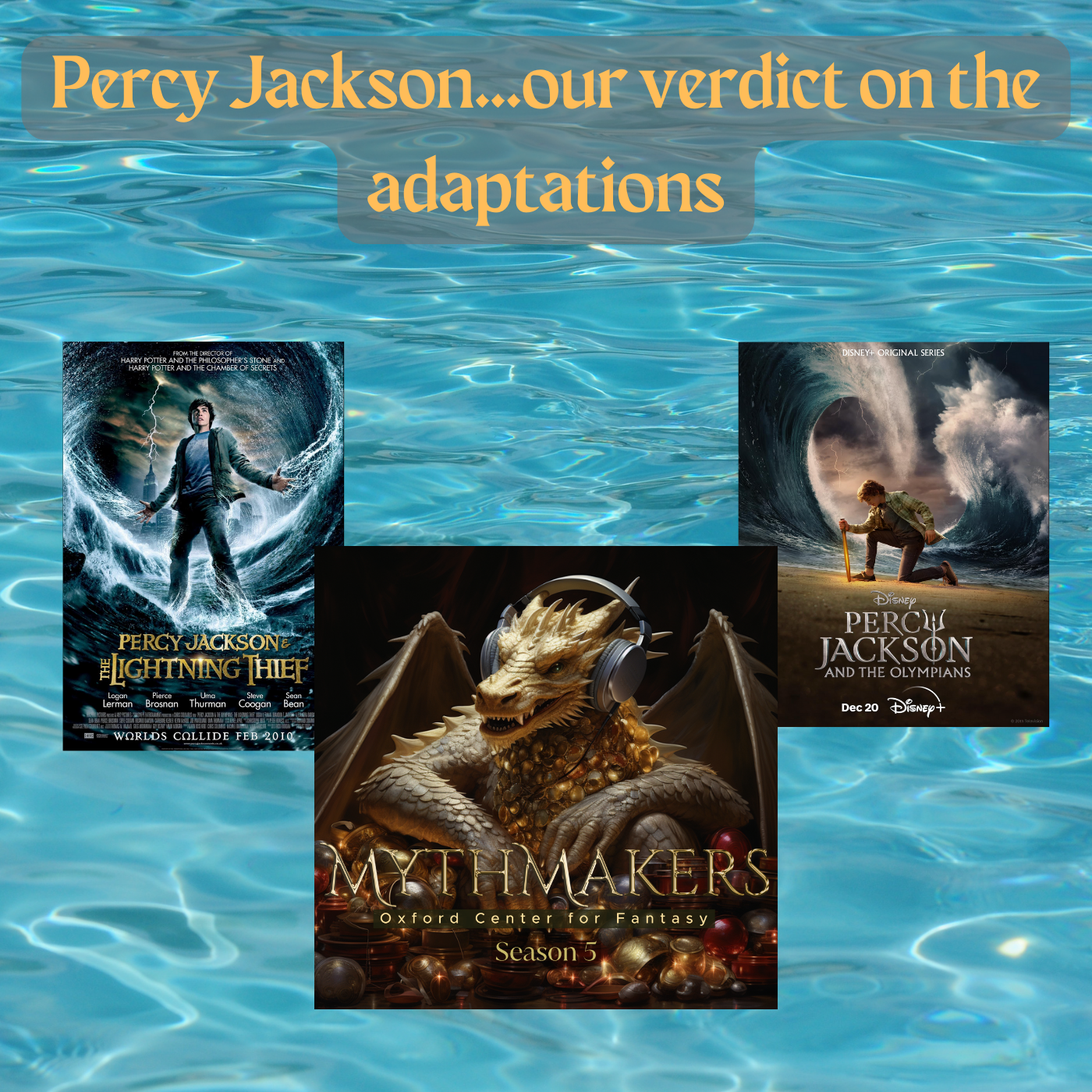
 What makes for a good adaptation of a beloved book series? Today on Mythmakers, Julia Golding and Jacob Rennaker discuss the latest fantasy series to undergo a significant adaptation: Percy Jackson and the Lightning Thief. What are the strengths of the book? What went wrong - or right - in the movie adaptation in 2010? And what has Disney made of the challenge, particularly as this time Rick Riordan, the author, was part of the production team? Join us for this intriguing discussion!
For more information on the Oxford Centre for Fantasy, our writing courses, and to check out our awesome social media content visit:
Website: https://centre4fantasy.com/website
Instagram: https://centre4fantasy.com/Instagram
Facebook: https://centre4fantasy.com/Facebook
Hello and welcome to MythMakers. MythMakers is the podcast for fantasy fans and fantasy creators brought to you by the Oxford Centre for Fantasy. My name is Julia Golding. I'm an author and also I run the Centre for Fantasy. And today I'm joined by my regular podcast partner Jacob Renica who is based in Seattle and is an expert on the making of fantasy games amongst other things and Tolkien but I've since discovered he is also pretty much an expert on Percy Jackson and that is the theme of today's podcast. So Jacob I first met Percy Jackson when my children were reading him they're in their 20s now so they were reading him as the books were first coming out and I remember them absolutely adoring that series and really getting into it particularly my my oldest boy it wasn't I mean we've got all of them on the shelf beautiful books. How long have you known about fantasy Jackson? Not nearly as long probably as your children have so I really learned about them got into them as an adult when I was graduate school actually. So it was more at the moment so you're in the in-between stage where you're waiting. Exactly yeah so yeah it didn't come out when I was when I was younger so and largely my interest was because I was studying ancient mythology and cosmology that's where the overlap was and kind of served as an introduction into the fantasy world in particular. So we're going to talk about what makes a good adaptation because there have been two bites at that particular cherry at least there was the film version of some time ago where they made I think did they make two or three of them two wasn't it the may two two yeah and Rick Reardon the author wasn't very happy with those adaptations and now they've just made the Disney adaptation of Percy Jackson and the Lightning Thief which actually had Rick Reardon as part of the production team being behind that series. So let's start first of all with the more general things what would you say makes for a good adaptation what do we mean by goods? Yeah that's that's a great question I think that's what is possibly the reason for some of the most heated disagreements between friends about was this a good adaptation right so everybody has a different idea of what good is and it really the the challenge of adapting books in particular is that the level of audience engagement that's required so you're having to paint all the pictures as a reader especially if there hasn't been any sort of adaptation prior you are casting the characters of the book yourself right you're you are creating settings and now authors are painting the picture for you but like you in your mind are really kind of creating all of the details they're kind of providing canvas and these characters they can describe them but you are going to be casting them and so each person for each person note no two audience members book like their idea of a book is going to be the same it's not going to look the same because they're having to do that personal creation by reading canceling the written word into their imagination as they're reading it so because of that I think it's really hard to agree upon good adaptations because good works of fiction are open to multiple interpretations and so somebody might gravitate to this particular message or this particular theme or this particular character arc in a book because they identify with with themselves and so to see that character not treated with the same care that that person had while reading it that's going to send send them off the deep end when somebody puts that air character entirely out of an adaptation or if they cast a character that was wildly different from the one that they imagined the character looking like in their head so I think a good so broadly speaking I understand that you can ever get an adaptation that's going to make any person happy completely happy who's read the book I think a good adaptation talking about it from the book's perspective and perhaps the author's perspective is one that does justice to the spirit and characters of the book and it's also a big US and open interpretation yeah I so this faithful to the book so a good adaptation that's faithful to the book and then there's an adaptation which manages to create his own form of artwork which in a way exceeds or goes beyond what you thought the book is. One area where I would say this let's move sideways briefly the Paddington films if you read a straightforward Paddington novel they're very sweet but a Paddington film has gone one step further and made a kind of brilliant magical world around Paddington and added all sorts of layers of characters and special effects which make it even more charming than the original material the original material is great and it's all right but they've gone above and beyond so that's a delightful example of a place where I don't I've never heard anyone saying oh that's a terrible adaptation of Paddington no everyone thinks yeah that's really good you've done something more so I think that's what you're looking for with an adaptation you don't need something that's a straight version of the book you want something which finds a new area in it so right let's turn to Percy Jackson and the Lightning beef as a book first of all let's think about it as a book then we're thinking about about it as a film and then we'll think about it as the television series so firstly as a book I remember my children particularly liking um how Richard had turned something which was seen as a disability but having ADHD into something which was a secret superpower so that was first of all a lovely sort of concept of reframing something that many children struggle with and then they also loved the modernization they already knew a quite few Greek myths being the kind of family we were probably already told more of this stuff had you know story books about Greek myths and they loved seeing the updating the surprising appearance of the gods in modern life so the playfulness and I think they also enjoyed Percy Jackson himself as the main character they don't like all books in that series equally and the following series but the first one they definitely everybody liked so that first book really works very well as a middle grade upper end of middle grade so slightly older children reads very very successful and it's a book they read on their own they didn't have it read to them so it might be the kind of book which a young reader picks up for the first time and actually gets through themselves because the storytelling and everything it's so exciting that it is a really good book to click children on to reading as an adult I read them alongside my kids and really enjoyed them too so how about you what did you find in the books yeah it's interesting I was actually turned off by the voice of the book just initial like gut reaction because it is very it's a middle grade audience and the main character it was a first person text first person narrative and they're yeah it's speaking like a middle like a middle grader and that the for for whatever reason it like it was really an obstacle for me to enjoy the book itself so the messenger as an adult though I was reading it as a great like yes as a graduate that's a different experience yeah right so but my my my nephew Connor who has ADHD knows it inside now absolutely loves it and like that tone and the you know cheekiness of the character of that first person character like that just like that drew him in and connected with them so I can see why people in that middle graders could really connect with the character and really enjoy that level of humor and like kind of commentary and so for yeah so it is firmly in middle grade yeah middle grade audience middle grade setting middle grade sensibilities and does a really good adopt for for that audience so what was most intriguing to me and why I kind of stuck with it in spite of the kind of dissonance that created for me not being a middle grader reading it was the way that Reardon translated the Greek gods into contemporary United States settings and culture to a certain degree so yeah so like it was a translation translation of Greek myths which that happens all the time right but this was very concrete by setting you know Olympus in New York at the top of the Empire State Building right so this the specificity that it provided provided you know it it created some fun connections and resonances that was just yeah that I hadn't seen done before in that way and so that was fun to see and trying to figure out okay so where is he going to place this or so I was yeah in front of anticipate okay so if I'm looking if I'm doing this where's the bay you know the greatest overlap between this character or this this place and America as I know it so it's like so it's almost like so a Neil Gaiman does this in an American gods to a certain degree it's a different tack but it's translating deities this ancient stories to contemporary life culture and what that means but it looks like I can't think of top of my head which came first was American gods first I think it was wasn't it well that's a great anyway that's a good go because you could imagine you reading that then as then thinking how would this work for children that might be part of the the sort of the compost style which the idea grew I would just point out here a couple of things for reading it as someone who isn't American as a foreigner um we don't have in the UK the same culture of summer camps so the summer camps were totally foreign we don't send the pack our kids off it's too expensive I don't have anyone afford that so your parents tend to get more holiday um so you might have a play scheme locally but you wouldn't send them off to a camp in the woods where they get up to death-defying things unless you know on not every summer maybe occasionally so there were sort of two levels of foreignness for an outsider and the other thing is there is a kind of American cultural supremacy that that I kind of think well what are the Greeks thing I mean maybe that's the language you'd use now and you wouldn't have in the 2000s but culturally upgrading the Greek gods so now I think about it I'm thinking actually oh okay it's problematic yeah and I yeah no I did that so I in as in watching the Percy Jackson series I reread uh the Percy Jackson Lightning beef just so it was just like right on the top of my head and that was one thing that I noticed that came up several times was explaining why are the Greek gods in America it's that well the center of western civilization was Greece and then slowly it moved and now the pinnacle of western uh western civilization is America so that's why it's here and so that came up and so like that reads differently today than it did in 2005 well probably no that's just everything so 2005 was when lightning beef came out and just answer your question 2001 was when American gods was my first oh interesting yeah so but you're right there is it does it does land different I think similarly to like the onboarding schools that's something that is largely foreign so concept to to American audiences so that's why that Kerry Potter is really intriguing to people in kind of a sense of like mystical or a foreignness that like oh you go and you live at a school and that's where you eat and sleep and do everything and you're away from your families until the holidays that that's something that we don't there's that's interesting yeah that from your end that not having summer camps it kind of has I think that same sort of mystique or sense of adventure uh that you might not have by a native audience yeah so that's a really good parallel so it the summer camps is our boarding school that agreement um so we're talking about you know thinking about this as uh as a novel I would say that it has a really strong identity as a novel beyond the little things we've mentioned which is it started off a whole kind of subgenre itself whether or not it was influenced by American gods or not I don't think that matters because other people have reimagined these gods and before that and in terms of middle grade and YA children's books it's become a whole sort of series of books which have the Norse gods and the Egyptian gods Rick Reardon has done some himself and I think there's a whole kind of licensing process where you can come up with another mythology is yeah he has a Rick Reardon presents like imprints sub imprint that he like selects yeah people that are authors from different cultures writing about myths kind of reimagined in contemporary settings yeah yeah maybe that's his answer because obviously he was writing this in the early 2000s and you know me saying oh well what about the Greeks maybe that's in a way in sort of reflecting on that and actually so I can see that as you're kind of okay I've read them tidy up no corrective so it's clearly very strong as a novel and great well done and I'm sure it will be a classic for many many years so let's move on to the first round of the the films um the big decision there was to age up the cast so I tried to think of the name of the young man who played Percy Jackson it was Logan somebody um he was probably a sort of he looked a bit like he was sort of high schooler you know he was good looking um I'll google his name in a second yeah Logan Logan Lerman Logan Lerman I'm going to say that and I sound a bit wrong but anyway Logan Lerman plus very beautiful Annabeth you know in probably beautiful for blue eyes I remember that and um and it's quite a cute uh rover I remember quite liking who's a bit older anyway but the Percy Jackson in that version white quickly became very adept at sword fashion he went from being it's as though he did the spider man thing within a really you know he went from being a sort of swinging between the buildings in like a scene um and they were also playing up on the sort of romance element a bit with Annabeth early on um there was also some darker elements in it so the the mother and her relationship with the horrible stepfather was a darker edged thing um yeah that's what I remember from it it didn't just didn't have the same charm I think yeah yeah yeah yeah no exactly and that's it and I rewatched the film in preparation you know for this like this I I've been inundated with Percy Jackson on the past like a few weeks um which I think is a good thing which is it's been a fascinating study of going between the book and the film and the television series um which I recommend to anyone to do just in terms of adaptations uh interpretations and re-workings um but yeah so this is so it's a Christopher Columbus film Christopher Columbus directed the first two Harry Potter films um hosted it home alone and it's done a lot of you know kind of like family block was like big large scale films that are like family friendly but that they're because they're large scale um they are what uh you call in in Hollywood four quadrant films so the four quadrants are audiences that are over 25 and under 25 and then male and female so the sweet spot is getting a film that hits all four quadrants uh you want males and females over 25 uh and males and females under 25 equally coming to the film and spending their hard-earned money to put money into your pockets that's the goal right for the studios um and so blockbuster films often are positioned in that way and so with the aging episode reason for aging up Percy Jackson is so that it can get closer to the over 25 audience you can have more romantic uh plots to make it something that's more palatable or uh interesting for adults but in doing so you there's there's trade-offs right um like you said so like the tone uh is there even the themes right so in the books um you might have themes of you know like coming of age uh personal identity coming to understand yourself um uh and what the gods are you know the metaphor for gods are used in well what are the gods being used in metaphors for in the books there's it uses it in several different ways in the film because you only have two hours of screen time you really have to boil it down to still it to one thing and kind of harp on that and it really in the film it really came across as uh to me the act of metaphor was the younger generations of gods rising up to challenge the older uh generations of gods which is an older teen right so it's the the older you know older high schoolers that are uh that are more rebellious they're really kind of finding where the boundary is uh challenging the authority of their parents um and so that's comes across that that's kind of what's happening here well younger generations of gods and older generations of gods represented for them a teenager struggling against their parents and like that's where you get like the conflict and even kind of like a lack of warmth between parents and children in like the god relationships they're really leaning into the conflict and making it more understandable as the protagonist by having completely aloof distant parents or parents that are abusive and that you deserve to overthrow them right um because yeah because the the teenagers have to be clearly the antagonist to be able to cheer for them yeah and that's so so there's yeah but definitely the aging up affects a number of things the proficiency of Percy such as kind of him as a character his attitude right as a character um and his relatability either way again depending on where you are in the audience um in the romance subplots um which is why they also including you know uh Pierce Brosnan uh as uh you know as as your uh carer on yeah yep uh and so that's to draw in the older audience right have like higher you know fake name actors that can draw in and like Pierce Brosnan it's James Bond uh attracting male and female uh audience members with with that kind of casting so it's it's strategic but like it is it is uh it's an adaptation they focused on something in particular to make a particular so it's a retelling so each adaptation is an interpretation and essentially a retelling um for a particular audience and that's the route that they chose to take yeah so do you think it makes a good film just giving um yeah but in terms of like yeah in terms of like a blockbuster like a four quadrant blockbuster film because you have you know like rather than focus on uh personal relationships you're gonna have the spectacles right so they're going to the casino like that's gonna be one of your big set pieces you're gonna have um you're gonna have you know like two or three big set pieces as I was expected and that's where you're gonna spend your budget on uh on the set on the CGI on on that um so yeah so it was I remember enjoying it fine when I saw it when it was uh when it came out in 2010 um it was it was just okay but for what it was it's kind of like a popcorn you know a light adventure kind of summer blockbuster film uh but not one that really merits or rewatching yeah I think that's exactly it and I think that's why Rick Reardon doesn't like it in that somehow they've lost the heart so in the film as you say it was perfectly watchable film um not at all bad to watch on a rainy day go into cinema you know nothing wrong with it from that point of view competently put together the performances are fine um moves along nicely as you say there's some great cameos from all sorts of famous people in it but I've never thought oh I must go back and rewatch that yeah no and we do have it on DVD downstairs somewhere I think still somewhere um but I can't remember anyone asking for it to go be put on again so yeah that and I think a lot of that is because we don't really care an awful lot about Percy yeah it's just something not if you think about Harry Potter for example if Harry Potter by starting him at 11 it will actually you start him as a baby don't you there is something almost kind of like we invested in seeing child succeed and the states get higher and higher and it gets worse and worse and worse if you'd started Harry Potter at you know um when he was in 17 the second to last year of Hogwarts you'd probably think oh okay but no you've seen a child and you've seen how it goes with her being living in the cupboard under the says there is elements of that in the Percy Jackson book with him failing at the schools and what have you which they don't have time to do in the film version because they're cramming everything into the you know two hours or whatever um and so we just end up thinking oh okay then we god finding his way we did but we're not invested so I think it was a good idea for them to have another go at it now as a limited series or the first series so what do you think of the Disney adaptation do you think the appeal to the audience has changed I personally think that this has gone the other way so going back to your four quadrant thing I think that actually by being more faithful to the book they've actually lost the potential of um older market I mean you might sit and watch it with your kids but I don't think it quite has the you know the people will say oh that's for children which it is is the series primarily for children yeah yeah no this is this this is fascinating so I was trying to think through like who who is the audience for this because yeah so you have uh you definitely have uh younger uh cast of characters um but at the same time the tone of the show is adult so you you don't have the like the kind of crass uh you know humor it's not leaning into the the Homer the the the humor is more measured and sparse than it is in the book right in the book purses kind of what is wisecracking a lot and you have a lot of jokes that a middle greater would would make those I was surprised by how few and far between those elements where this was a very really a very kind of like somber and serious yeah it's tucked off because the palette is quite dark and I was watching it um and I was traveling and several times we couldn't work out if it could see it because it could work out okay yeah yeah sitting's wrong so in bright hotel rooms or something so it is yeah yeah need to be seen with the curtains closed so I'm yeah and I'm so this is where like I haven't I need I'm interested in talking to children to see what they thought and if they liked it because to me as I was looking at what's happening there with the with humor being kind of more sparing um it really is getting into the emotional lives of these characters right and when the kind of the operating metaphor that it has here is like gods and they're offspring is a way to explore and critique uh parent child relationships right so it's not the like overturning the gods like that part of it but it's more so they examine all the different the exact examine healthy and toxic family relationships and patterns um and so that that's really the through line and they do a masterful job of that something that didn't even like you're saying earlier when an adaptation can add elements and really transcend in some ways what the storage material did that's really what I feel it's happening here with the Percy Jackson tell of the television series just this and plush series is that they're honing in on this particular thread um the gods Greek gods and the stories of Greek gods and gods of the offspring of gods and interrelationship between these families of gods right because they're all related so by emphasizing that family relationship and exploring challenges that everyone has in their own family uh relationships tensions misunderstandings disagreements love hate relationships with parents with cousins uh aunts uncles uh siblings all of that and they're really honed in on that and and lifted up those elements from the book or even introduced some elements that weren't necessarily there explicit in the book and in doing so we're able to craft a particular uh emotional arc and journey for Percy Jackson for these other characters that I thought was was masterful this was very very very well done yeah but actually hearing you talk about it though does spake me wonder I think they they've missed a trick in actually being in love enough with the worlds of Greek gods I'm thinking going back to Harry Potter's I keep thinking of because there is an element of Harry Ron and Hermione with Anna Beth Percy and uh yeah yeah I mean but there is a moment quite early on in the first Harry Potter film where he says something like I love magic I just love magic he's looking around Hogwarts and it's just um and I wanted obviously you know there's the the downside is poor old Percy is actually starting his journey being traumatized because he sees his mum dying so he's starting his work in grief which is difficult to actually then say hey we're also fears but I wonder if the element of um whether the actual magic of being a demi-god is sufficiently enjoyed I wasn't sure about some of the CGI choices my biggest problem was with the chiron in this one who I thought that the proportion of man to horse looked really wrong so I was starting to like okay where's just stomach you know it looked right and stuck on top of the horse um I really think they could have done a better job of the proportions there have been other centers who have been done better and there was just like really bad about that and I found it really off-putting um some of the CGI was a bit iffy I know it's probably not got the same kind of budget as a film would do but maybe one of the reasons for so many dark scenes is it's cheaper to animate monsters coming out and complicated monsters against the background yeah I felt at times that the budget felt a bit straightened and not quite what we now get used to um I did what I meant for me what I really liked about this version and I did watch it all the way through and enjoy it and I would watch another series so I mean it's it's succeed from that point of view is I really did like Percy he was convincingly young his voice slightly on that edge of being broken broken yeah vulnerable you had this vulnerability about yeah so when anabeth is um the sort of first prefiguring of anabeth sort of scheming is how she uses him in the capture the flag game and him wandering around being oh I'm told to go and stand over here now am I you know that feeling of being the child who doesn't understand what's going on around you was I thought really well evoked and that felt very relatable and I thought he was splendid I thought Anabeth was also she was given a limited number of things to do but she was fine as it you find I but I also particularly like Grover yeah yeah yeah very strong and this and this is one of the yeah the amazing difference I think between today and say 30 40 years ago is like the caliber of child actors yeah this is like it's a very very good so like there wasn't there wasn't really there I can't even really remember moments where acting took me out of of the story yeah these young actors were so good and so invested in these like emotionally wavy roles again like exploring these themes of trauma overcoming family based trauma that like I'm just yeah very very impressed and thought that they definitely added to the story making it convincing that like yes these were people who like you said like vulnerable like the vulnerability just like shown through and like the regret and sadness and like the dilemmas that they're having to go through that it was really it was very real and grounded and I don't know again like I don't know that they did such a good job of following the script if that was the script didn't have within it more of a sense of the wonder that you said because you don't really have as much you have moments where they're just like yeah this is fun kind of playing a playful experience with having godlike powers but that's really kind of subdued and here in this whereas with the book right it was you have to see the superant voice this character is first person who is you know every time something happening to talk about how cool it is and how awesome or great and is constantly pointing out the wonder so that's one of the things that you're right I think to to observe that here by by focusing on those really heavy emotional relational themes that some of you miss a little bit of the sense of like wonder that maybe people in that age would be more likely to experience and notice and have highlighted in the Harry Potter books and the adaptations there so we're talking about the success of adaptations would you say that the TV series was a better adaptation in the film by yeah yes for what they're trying yeah I think I think I think it is I think it's one like I I would later rewatch the Percy Jackson television the Disney Plus series because yeah there were a number of things the themes that they're experiencing or yeah that they're exploring and expressing touching on so it's fundamental elements of like yeah family relationships trauma trauma response dealing with talks for relationships as well as ideas of meanings they're able to take questions about you know like what does something mean like we're talking about the St. Louis arch for example you know like is this the is this really a a trying to Athena's like well if somebody imbues it with that or somebody approaches it in this way yes it can be imbues so it's they're dealing with a number of different topics that are larger and that like Greek mythology deals with uh writ large um but it's the the that has and again it doesn't it doesn't really harp on like this is this person is categorically good this person is categorically bad right you show how with with how it deals with Poseidon with Percy's father spoiler alert uh for people who didn't but I hope that wasn't too much but like his mother right you see like the goods the struggles that she isn't all iteratively an incredible parent she has things that she's working through and that has done wrong and she has to own up to that same thing with the father he's far more relatable uh than the you know film version or even I think in the book perhaps like you have I think there's a level of there's a depth there's an emotional depth and kind of an ambiguity uh that allows I think for a richer uh engagement with the text and like those ideas as as of being a piece to a blur family relationship so I think in that sense that it makes you think and interested to revisit it and think about those ideas long after uh I watched it then if that's the rubric that we're using then yes I would say it was a very successful adaptation yeah you you you raised the question in our sort of notes for this discussion about if you see any links between Tolkien and Percy Jackson other than Percy Jackson sounding a bit like Peter Jackson no not that um what I was thinking actually is a link is a sort of basis of fantasy because what Rick Reardon has done is moving aside from live religious discussions you know you don't want to sort of have a you know have i jesus and god and these things being involved because that's kind of people's real living face that you'd be using as a structure um by moving it sideways to imagining as of a modern pantheon for america and then reinterpreting the gods and the creatures within that within american context you sort of give this mythology background that is is extendable that you can imagine you can tell stories within um so that's the great kind that's a really strong fantasy world because it has negative extensions and if you think about what Tolkien was doing is he was he invented his own pantheon of gods which he put on top of a sort of prehistory for Britain um with his valar and the music which is you can see the roots of that in other mythologies like the nor scods and others but that he's doing his own version of it and extending that world to such a point getting beyond the silmarillion that you get stories that kind of only very very likely touch on his pantheon he originally thought of they're there behind it all but he's moved so far away that it almost can tell a story without mentioning them obviously at all so there is a sort of correlation between those two which i think is worth thinking through if anyone here is listening and it's thinking of creating their own fantasy world it's how do you deal with your you're a divine element if you've got one in your story how do you interpret it for me that was a connection did you see any other connections because you raised the question yeah yeah and i think your answer was great a great observation i was thinking of like more of a crass practical level with the adaptations which is all due to the all due to the cheap answers you gave yeah so maybe we should reverse that and you give weight and give you that same answer after i gave this like really superficial answer that would be great uh so uh with the films themselves right uh so the film uh Sean Bean uh plays Zeus right right it's played Boramere uh in the Lord of the Rings films uh and then uh for the Percy Jackson's uh didn't he plus series uh the themes uh the musical themes uh were created by Baramere Careery who wrote the uh score and soundtrack for the Rings of Power series uh so you can hear if you listen to it watch Rings of Power you could hear some echoes of some of the some of the things that that are used there in Percy Jackson but um yeah so that's so that's my superficial Tolkien uh kind of like secondary tertiary uh Tolkien connections to uh Percy Jackson in adaptation specifically but i really like what you said there about yeah that but i think one of the reasons why Percy Jackson had as a series and as a world like you said it allows for imaginative extension i really like that phrase i think that's the sign of a really good imaginative world because the same thing with like Harry Potter right that it allows for imaginative extension for people to want to enter into that and want to like tell stories and that there's it feels like there's space that you could tell a completely different story um they're on the kind of scratching the surface and that's really what you get with Tolkien that the world that he created in the Somerlean that Lord of the Rings is just scratching the surface as one possible story is when you're only following one very small piece of this enormous world that was created and so i think y'all Percy Jackson you can kind of see that once you're setting it against the backdrop of gods um and their relationship and machinations across like an entire country that's like very large unnecessarily large country um that like the the opportunities for stories and storytelling i think is uh is there and almost endless um so yeah absolutely agree with him thank you so just to wind this up do we have um a Greek mythology related fancy tip because we always have some kind of fantasy tip at the end um what's yours so i i went uh resist past summer listened to both the Iliad and the Odyssey uh narrated um phenomenal jobs by Alfred Molina narrated the Iliad um if you're a superhero fan if you're a Shakespearean uh fan uh he is a wonderful um he's uh he's British uh if you're a superhero fan he was dog he's Dr. Octopus in Spider-Man 2 um but he's like he's he's he's and and uh um no way help um reprise in his role phenomenal but he does he does he does a tremendous job so he's a the classical tree doctor um uh guild school for acting it's like just a just uh phenomenal um so he does the uh narrating for the Iliad and the Odyssey again another superficial Tolkien uh connection is narrated by Sir Ian McKellan uh you get a version of that uh that is that is wonderfully done and so if you're looking and then just like as i was you know listening to that just again these imaginative worlds imaginative extensions just being uh fully immersed in these worlds and kind of like following the flow of the stories and Homer's storytelling uh that really just kind of renewed my love uh for the classics and uh Greek literature in particular and I actually the reason I went through a read lesson reread was uh after reading a few different biographies of CS Lewis and his kind of regular his love for uh Greek literature and how much that inspired his own writings uh and fantasy writings and what he's doing in Narnia so you can kind of see little glimpses and peaks of different things and how that intersects and uh that was just delightful so my recommendation is an old one you might have heard of it it's the Iliad and the Odyssey by one uh Homer one yeah yeah sorry exactly but does the audio versions are great that links quite well to my recommendation which is uh as we are um interested in the inklings you mentioned CS Lewis if dear reader out there you haven't yet read CS Lewis's until we have faces you don't really understand and know CS Lewis it is probably his best adult novel by quite a long way it is reimagining of the uh the psyche miss but it is an unusual female heron completely different very complex than anything you might expect him to write so i would i would say go away and read that because it is a huge surprise when you do i bet if someone gave it to you without his name on the front it would be one of the last people you imagine who'd written that novel it's so surprising okay so just a little bit of fun where do you think in our best places in all fantasy worlds where do you think it's the best place to be a god but we're going to narrow it down in honor of Poseidon where do you think it's the best place to be a water god in all the fantasy worlds with your tried to outro the water and see i would love i think and this is again biased towards CS Lewis that narnia i would love to explore uh but being a water god in narnia was like because we see you know you have niads dryads you have different characters but you don't see river god comes at some point in principle i do you know exactly right yeah exactly and so i think with uh yeah voyage of the dawn shredder you're in the water and so like you see right the underwater like towards at the very end you know this kind of like underwater world that they just like hint at and give you kind of a longing and see so it gives you like instilled a longing for this like underwater world that you never you only glimpse barely and then leave behind but just like just the the imaginative with with narnia's kind of Greek philosophical and mythological kind of underpinnings and intermixings i think that that's would be fun to explore i would like to see what what the Poseidon or the Poseidon equivalent is would be doing in narnia something that's completely just like attached to the sea in the world of water so how about you Julia i'm going to go slightly different um because you know i think he aquaman avatar no no no no i was thinking actually one really interesting imaginings of a river god is ben a run of it cheers rivers of London which is the series of novels set in a sort of slightly skewed London where the river gods like Father Thames and the other rivers that are now mainly lost in London are all personified in that Greek mythway and i think that's a really fun thing to think of so a lot of those are taken so i might try and be another river that's not yet been given a i don't know the tweed or the river seven or something i'll choose another river and have in visit that world as this sort of personified god godess i think that's quite an interesting uh way of putting a fantasy frame around natural things well that's by choice ben a run of it the rivers of London Jacob thank you so much for talking about press of jackson with us and we look forward to Disney getting around to making a second series because i think we'd both watch it wouldn't we yeah yeah so goodbye from us thanks for listening to myth makers podcast brought to you by the oxford center for fantasy visit oxfordcenterforfattery.org to join in the fun find out about our online courses in person stays in oxford plus visit our shop for great gifts tell a friend and subscribe wherever you find your favorite podcasts worldwide