
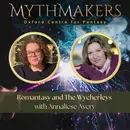
Romantasy and The Wycherleys with Annaliese Avery

 Apple Podcasts

 Amazon Music

 Spotify

 JioSaavn

 Castro
Key Takeaways
- Fantasy fiction serves as a cultural mirror, helping readers process collective anxieties and historical events from the World Wars to COVID-19.
- The rise of romantasy represents a significant shift toward acknowledging a previously neglected readership by centering emotional connections and relationships.
- The Wycherleys trilogy combines historical Regency romance with a unique witchcraft setting where magical matches are necessary to prevent the fading of magic.
- Effective magic systems require clear boundaries and limitations to create meaningful obstacles and drive character development.
- Annaliese Avery uses the 'Draft Zero' method and iterative world-building, discovering plot points and rules organically as her characters react to situations.
Annaliese Avery, author of the Wycherley series, joins Julia Golding on the pod to talk about the conclusion to her trilogy. Annaliese and Julia explore the phenomenon of romantasy, the kind of rules necessary to make magic systems believable, and the appeal of the Regency period as a fantasy setting.
Prepare yourself for a few shocking revelations about first drafts and dragons!
To learn more about Annaliese and her writing visit https://www.annalieseavery.com
00:00 Introduction: Welcome to Mythmakers and Romantasy with Annaliese Avery
01:44 The Rise of Romantasy: From Trope to Genre
03:09 Fantasy as Cultural Mirror: From World Wars to COVID
06:36 Romantasy vs. The Hunger Games: Generational Appeal
08:52 Girls and Fantasy: The Romantasy Revolution
16:55 Introducing The Wycherleys: Magic, Curses, and the Season of the Witch
21:50 Magic Systems and Boundaries: The Power of Limitations
23:47 Regency Romance Meets Witchcraft: Rules and Longing
25:51 Building a Magical Regency: Historical Fantasy World-Building
27:20 The Draft Zero Method: Writing by Deleting
30:48 Visual Storytelling: Invitations, Wheels, and Black Pages
37:34 Rivals to Lovers: Aurelia and Jules's Journey
41:46 Multiple Forms of Love: Beyond Romance
44:35 Dragons and Wyverns: The Controversial Six-Limb Rule
46:15 What's Next: Knights, Jousting, and Cozy Crime
48:40 Fantasy Covens: Where Would You Join?
For more information on the Oxford Centre for Fantasy, our writing courses, and to check out our awesome social media content visit:
Website: https://centre4fantasy.com/website
Instagram: https://centre4fantasy.com/Instagram
Facebook: https://centre4fantasy.com/Facebook
TikTok: https://centre4fantasy.com/tiktok
Frequently Asked Questions
What is romantasy and why has it become so popular?
Romantasy is a genre combining fantasy elements with central romantic tropes and relationship-driven plots. It surged in popularity as readers sought emotional connection and a way to process the isolation of the COVID-19 pandemic.
What is The Wycherleys series by Annaliese Avery about?
The Wycherleys is a young adult fantasy trilogy set during a magical version of the Regency period. It follows young witches who participate in a debutante season of magic to find partners to tether their dwindling powers.
How does the magic system work in The Wycherleys?
In the series, magic is an energy that is neither inherently good nor bad, but it slowly disappears over time. Witches must tether their magic to another person, though these matches are often made for friendship, politics, or survival rather than just romance.
How does author Annaliese Avery approach her writing process?
Annaliese Avery does not plan her books out entirely beforehand; instead, she collects ideas in writing journals, uses mood boards and playlists, and lets her characters organically discover the rules and boundaries of the world as they write.
0:05 Hello and welcome to Mythmakers. Mythmakers is the podcast for fantasy fans and fantasy creatives brought to you by the Oxford Centre for Fantasy. My name is Julia Golding and today I am joined, I'm delighted to say, by Annalise Avery, the writer of the Witchleys series. We're both sitting with the marvellous Witchley paperback, so we're going to hold these up for those of you watching this Um, it's a young adult series which has a period setting, but also a witchy theme, which you may have picked up from the title.
0:45 So welcome to Myth Makers, Anneliese. Oh, thank you so much for having me. So we are going to get into the details of the series because you're in the delightful situation of having just completed it. It's a trilogy and here we go with the potential, you know, there are some elements which could suggest future problems for your characters. But it is a completion. So we're going to talk about that series and how you came to it. But it fits within... what many people listening to this know as romanticity. And I was reading, Anneliese, that you have, in previous lives, been editors for children and young adult fiction.
1:30 And I thought you'd be a really interesting person to ask about this phenomenon of romanticity that has taken over a big part of the fantasy market and is driving a lot of sales at the moment. And, So, when did you first see the wave approaching with the term romanticity attached to it? Because we can all find romantic fantasy books, can't we, going back before that? Oh, yeah, definitely. Sort of emerged. I think that, so it's one of these things with, basically, when we look at the evolution of different things, different genres. So if we look at the evolution of fantasy as a whole, we can see when different things that started off tropes then cross a threshold.
2:18 So when they kind of get big enough to cross a threshold, there are many people writing about it, many people talking about it, and then it becomes a genre in its own right. And that's what's happened with Romanticity. So we've had Romantic tropes within fantasy fiction for ages, you know, like, Even in Lord of the Rings, we have romantic subplots going on. Such is life, you know. Such is life. Yeah, exactly. We all like to have that. And I think that we can definitely see how, especially with fantasy fiction, I think that fantasy fiction is a wonderful vehicle for human explorations, for us to explore our feelings, how we're feeling about things that are happening online, to us currently, but they also give us a little bit of distance through that fantasy lens.
3:09 So again, looking at Tolkien, if we look at what he was writing about, we know that he was processing all of the things that were happening around his time. He was looking at that through Yes, particularly the First and Second World Wars. Exactly. Big things to process, really. Big things to process. And he needed little hobbits in order to help him to do that. And also everybody else needed those hobbits too to help them to understand what was going on and how we as a collective felt about it. If we fast forward into, like, the Cold War era, we see that there is an emergence of science fiction fantasy. We had like a little science fiction fantasy bubble happen.
3:50 And that's because there was a big threat that was happening and it seemed quite futuristic and we needed to examine it for ourselves, but we needed to examine it safely. And books have always been a place that we can safely look at things, look at the way that we feel about things and how things might through fiction. And then in the late 90s, we had lots of dystopia. It was the rise of dystopia. We were in quite a stable place as a people. Well, that's true. Compared to where we are now. But we needed to examine, okay, we're feeling quite stable.
4:33 We can examine these harsh realities. We can have a look at that through the rise of dystopia. And I think that coming out of COVID, where we missed so much physical and, you know, like we talk to each other on Zoom, but it's not the same thing as being connected with each other. We just wanted connection. I think we really felt that we needed connection. So during that time, that's kind of when I feel that romanticism. It was bubbling before then with Sarah J Maas and other people writing their... They started the romantic bubble that we're living through now.
5:18 But it was definitely through those COVID times where we needed people. We needed to feel connected physically and emotionally. And we weren't receiving that from our natural environment that we got that from books. um yeah so I feel like I think that's really interesting I didn't mean to talk about dystopia but I'm interested in this idea that we only could really cope with dystopia when things weren't so bad and then there was always a sense a growing sense of there being the risk to the environment I think during that time as well yeah which hasn't gone away of course Maybe because it's fallen a little bit out of favour now.
6:06 It's not the thing that's... We're living in it now. People think, enough of that. I'm going to... Yeah. I mean... Enough or, you know, whatever it is. Yeah. So it could be there's a sort of what isn't happening is what fantasy gives us. Yeah, or just a way to look back on what has happened recently so that we can process it. And I feel that I know that there is a lot of talk within the industry at the moment that dystopia is having a bit of a rise. Oh, is it? Okay. That's good info there. But personally, I feel like maybe that is because we are living through those times and we have the wonderful – Hunger Games, the Hunger Games re-emergent, that coming back.
6:56 So it's challenging current things, current status quo. But the return of Hunger Games seems to be, for me, limited to a very specific generation. It hasn't... So whereas, I don't know, Narnia or Lord of the Rings or Star Trek or I don't know, something like that... goes beyond more than one generation. I always thought Hunger Games... has its loyal, big loyal following, but never really caught on to something mass and popular. Am I wrong? I mean, I feel... If you go and see the films, they're going to be the ones... Yeah.
7:38 I mean, I feel like sometimes when we're looking at stuff like Narnia, for example, it's been out for a really long time. You've got to think of all the generations that have accessed it. It's also worth keeping in mind that that is a children's book. Yeah, so it keeps renewing itself, doesn't it? Yeah. And most fiction that we think about when we think of classic fantasy fiction, they started off as children's books. So The Hobbit, it was a children's book. Narnia, it was a children's book. And then we read them as children. And then when our children got old enough, we gave it to them and we were like, we're excited about this. We want to share it with you. It became something that we shared through generations. Whereas when you're looking at something like The Hunger Games, that became something that teenagers found.
8:20 They found it It was a liberating experience for them, not only just in reading of what was happening to Katniss and was happening within the capital and everything within the book, but also it was something that they found for themselves. It wasn't something that was given to them and passed down. And it may be something that, you know, as people get older, they then give it to their children. It'd be interesting to see if that happens, I think. So, yeah. Yeah. So going back to romantasy, which is where we really want to go today, one thing I wanted to ask you about is the readership because I don't know about when you were growing up, but when I was growing up, the idea was a lot of fantasy readers.
9:07 It felt like it's a boy's world, really. fantasy was largely produced, not young fantasy, not like little children books, not middle grade, but the kind of books that were then in the space, which is now where YA is, though that wasn't particularly a category, were often the sort of, I don't know, the boys who got teased for playing Dungeons and Dragons, you know, that kind of thing. The boys who are now made over to actually be more... You know, they suffered in those eras, whereas now it's perfectly fine to do that and perfectly mainstream. And I think one of the noticeable... lack of provision was for girls, not only in characters within those worlds.
9:54 We're talking a long time ago, characters in those worlds, but also books in those worlds. So there was a lot of historical romantic fiction that young girls would go and read, like Jean Plady and Anya Seaton. I remember that was the sort of through thread for girls of my age. That's the kind of thing you go and look for. I wasn't sent towards... Isaac Asim off or something you know I was sent off in that direction um and I wonder if one of the other empowering things about romanticity which is primarily read by and not exclusively but primarily read by girls is it's the market saying here you are girls we you know have at this because this might be something you like and we've taken into account your tastes and what things that interest you, which is relationship-based.
10:42 So I feel that there's actually a liberating thing about romanticity and people huffing and puffing about it, saying, oh, these dragons. Dragons and sex is the sort of thing. cliche about it. It's not that at all. There are some books that are that, but it's a much bigger category. And it's saying to a previously neglected readership, maybe you like these stories. Yeah, I think it's really interesting when we're looking at fantasy fiction in particular, when we're looking at main characters. So mostly main characters in epic fantasy adventures are men. We have our main character, the male main character, even in children's fiction.
11:26 It's mostly, even now, it's mostly boys. at least the biggest selling books. There are lots of girl protagonists in fantasy fiction for middle grade. But once we move into young adult, which is what The Witch and Liz are here for, I do write for young adult and I write for new adult. I've got a new adult series, a romantic new adult series coming out next year. And there are... Big differences, I feel, in the content of those two audiences that you're writing for. But when we're looking at teen readers and young adult readers, there is a big drop-off of boys reading.
12:09 Anyway, we know this from the statistics. Yeah. So most of the primary protagonists become girls. And yeah, there is a lot of liberation in the fact that, you know, we're showing the girls that they can be, you know, they can wield a sword. They can totally have lightning magic. They can do all of the things that these boy protagonists that they've seen and epic fantasy novels can do. But yes, there is also this romantic element to it as well. Sometimes I feel that that romance, I know we're going to talk a little bit later about fated romance, matches and things like that. I feel like sometimes we do air into maybe a narrative that isn't as nurturing as it could be with these stories.
12:57 But also we have to remember that romance is the biggest selling fiction. Within all of the genres, romance sells the most books. I think it's more than just romance. I think it is an emphasis on relationships. of all sorts. So friendships, which are super important, particularly to, well, I mean, hopefully everybody has friends, but there is a time in your life when you are thinking, who are my friends? How can I get a friendship group? And that is the thing which is probably even more important than which boyfriend or girlfriend you end up with. And I think that focus on the smaller circle and the dynamics of your relationship, friendship group, frenemies, enemies, is where the difference, one of these important differences, the warmth of the emotional temperature in these books.
13:52 So going back to Tolkien, his What actually holds his book together is love between hobbits and the fellowship. And you can have all these battles going on all around, but unless you've got a little hobbit at risk in the middle of it, you don't care. And there is an element of emptying out of love and affection. interest in an epic battle where it's all, you know, moving this army there and this spaceship over there. When it becomes too big, too impersonal, too mechanistic, too much about sort of warfare without the actual stakes of the people involved.
14:35 And I think Romanticity is a bit like that term chiclet. It becomes a slightly burdensome label because what you're actually describing in a book is where the relationships are the most important subject in a fantasy setting because they are where real drama happens. Yeah, definitely. And I feel like in order for a book to be labelled Romantic, the romance, the relationship element has to be something that is integral to character development, but also integral to plot change. Otherwise, it's just a trope or it's a subplot. So there are, obviously with all of these things, there are sliding scales.
15:19 that we have, that we see. But yeah, friendships are ridiculously important. You know, the bromance within Lord of the Rings is strong and we love it, you know. Yeah, even for these kind of quite, you know, they would have been gentlemen of a repressed type British thing who were writing this, you know, Tolkien, C.S. Lewis, they're all... But don't forget, again, they were reflecting on World War I, World War II, when people came together. They banded together for the good of all, and they were fighting for something, and they were supporting the hobbits, you know, in their great endeavours. So there is, again, we can relate it back to that, what they were looking at, and the idea that we are stronger when we are together, and we are stronger when we are together.
16:09 Not just together, but when we get along. And there are differences within the fellowship. The fellowship breaks up. But at the end of the day, they still admire each other. They understand why these things have to happen. So let's talk about your own little fellowship, which in your books is because you've got this witcherly theme is in the sort of creation of a coven. So before anyone sort of throws their toys out the pram, we're not talking black magic and all this kind of thing. It is magic more. How would you describe the flavor of your, where does the witchcraft fit? Because obviously there is a whole range of witches out there for people.
16:51 Where is your witchcraft centered? So in terms of what kind of magic are we looking at, I definitely wanted to create a magic system where the magic itself was not good or not bad. It is the way that people use it. So the way that somebody, a person, uses their magic, it can be malevolent and used for malevolent purposes or they can use it for good. When it's used for good, it's just magic. It just is. It is magic. It's like electricity. It's just magic. But when you're using it for malevolent purposes, it's malevolent magic. Yeah. So yeah, so The Witchlears is based in Regency time.
17:36 And there were, whenever, I guess it would be easier if I talked a little bit about my writing process. Because I don't plan my books. So I never plan. But I do like collecting. So I'll collect little ideas. And I put them in my writing journal. And I also have Pinterest boards. And I have Spotify playlists for things I like. And I let them kind of just cogitate. They sit in my brain and they just bound together. And then after a little while, I have a couple of ideas that fuse and I'm like, okay, this is exciting. This is the thing that I'd like to write.
18:19 So there are a few things that came into the Whittleys. I'd written a proposal for a middle grade book that didn't happen and it was basically Home Alone but in a Magical House, which I really liked. Maybe one day, sometimes these ideas come back, you know. But there was a family of witches and there were some siblings. And within the structure of the siblings, it was quite a big family group. There were some twins. And the twins could only perform magic if they were together, which was very annoying. Could you imagine if you could only perform magic if you were near your brother or sister? Yeah. No. So I had this idea of magic being dependent on another person.
19:01 And I quite liked that idea of that limitation. What did that limitation put into the magic? Because sometimes it's about finding the boundaries of things and then hitting up against it. And that's where the interesting bits of character or plot come out. And I also, obviously, we have the season of the witch and we have the debutante season in Regency time. And I was like, oh, I like the idea that you have the seasons and the seasons. And then I found out that basically as the debutante season in London finishes, all of the really fun witchy stuff starts. You know, we've got Mabon and then we have Soen for Halloween and then we have Yule.
19:42 And I thought, OK, what if... When the Torn evacuate London after they've had their season, the witches then move in and they have their season of the witch. And they have debutantes, but their debutantes are debutantes of magic and they're not looking to make a marriage match like the other debutantes are. Instead, they are looking to make a magical match. Because they need another witch to tether their magic to. So they all receive their magic on the full moon after their 17th birthday. And from that moment on, magic is slowly disappearing. Something changed with magic between the second and the third age of magic.
20:24 We're currently in the third age. And... So they need to find another person to tether their magic to. And these magical matches do not have to be made for love. In fact, if I was a witch during Regency time and looking to tether my magic, I would not choose love as the main reason. I'd definitely choose a friendship or maybe somebody who I can resonate and work with well. And also sometimes these matches are made for political gain and power as well. I started off writing the first chapter of The Witch Liz and like I said, I found out that it was the third age of magic and then that made me think, okay, that's interesting what happened to the other two ages of magic.
21:09 So I had to then have a little think about that. And then I found out that my main character was really nervous about going to the debutante ball, as she would be. But she was also very nervous because she'd been cursed. And when she received her magic, she also received her family's curse, which only travels through the female line of her family. And it means that whenever she tries to perform magic with another witch, they become very sick of it. So nobody wants to tether their magic to Aurelia Witchley because if they do, they're just going to spend the rest of their lifetime throwing up everywhere, which is not fun for anyone.
21:50 So I'm interested in this, what you're getting at here, which I think is so true, which is when you're creating a world, a fantasy world, what's really important are where the boundaries are. So magic isn't interesting if it's just endless. Yeah. The air we breathe, you know, because it doesn't actually have any structures or, limitations or anything, but actually it's where you start saying, well, let's make it difficult. Let's put in some obstacles. So you can only, the rule is, the game rule is you can only move in this direction and you have to throw a six to progress. You know, it's that kind of thing. Yeah.
22:31 And so I can imagine this is what your notebooks are full of. My notebooks are mostly full of star stickers because I reward myself with star stickers for every small amount of effort that I do because I'm highly motivated by stickers. And I need to be motivated. I'm just going to grab my notebook just to show you. There we go. There is a page of stars. Serious stars. Serious stars. What I'm looking at is a whole page full of stars. Little black ones. Yeah. So, yeah, so I might, but yeah, my notes are basically full of like, well, if this happens, how will that work?
23:12 And, and, you know, where are the limits and how can we push up against it? But an awful lot of those things I find out whilst I'm writing, and whilst my characters are reacting to the situations that they've been placed in. Yeah. And yeah, I feel like if you have barriers or if you're like the thing they need to get to is on the other side of that and they have to push through, we always want characters that are going to grow and expand. And that's a really good way of creating a character that grows and expands within their environment and within the things that are limiting them. But it fits very well with the Regency setting because one of the reasons why Jane Austen's romantics, well, hers are not romantic in that way, but they've been interpreted as romantic stories and things like Bridgerton, how reason they keep working is...
24:05 It's a world in which there are rules, etiquette about how you court somebody, what is rude in society. It's small things in Jane Austen. It's saying an ill-thought-through quip to an old maid, you know. And that's socially clangers, you know. So small things resonate large when the rules are very, very clear. And the same goes for, you know, romance and sex, that you're not sort of... making out with every guy in the back of every ballroom. It's, did he touch my hand? Did he sign up for a dance on my dance card?
24:46 It's small things, but you can judge a vast amount. And if you just think of something like the Keira Knightley Pride and Prejudice film, the most erotic moment is when he put hands her into a carriage. You know, it's so tame, but yet we all know, that's the moment, you know, you can see it. So the rules and the repression, not so much repression, the constraints. The longing. I think it's the longing. Yeah, it's the constraints to make something mean more because it's, It's like got boundaries. So you've got that on your magic and you've got that on your relationships in the region.
25:29 So you've got the two things harnessed together for Aurelia and Jules, who's the hero of the piece. So, looking at that, let's have a talk about use of the Regency period itself, because obviously it's not our Regency, our historical Regency. How did you go about approaching a historical fantasy setting? What bits did you take? What did you depart from? Well, so this, I've written three books that have had like a historical setting, but different. So the same, but different.
26:10 And with The Witch Liz, it was a bit like tracking back and going, okay, let's look at those ages of magic that came before. Okay. How were witches treated? What is the feeling around witches? What were the major points within their historical system? What are the points that they're looking at? Where does that overlap with the world that we know historically? And where are the points where they collaborate together? Where are the points where they drift apart? Because you can't just create... You can't just drop them straight into Regency London. You have to think about what does the presence of magic mean to a whole society?
26:52 How did we get here? So there are two different governing bodies. So you have like, you have parliament and you have the crown, but the crown also looks after or oversees the magical council as well. And the magical council is made up of five different covens and the covens have, they each have different types of magic that they focus on. And so it's thinking about those kinds of things, but it's also interesting. All writing, like when I'm writing, I do my first draft for me, like my draft zero. That's my draft. I then delete that draft. I don't keep it. And then I write, no.
27:32 Yeah. You really do that? Oh, wow. Wow. Sorry, I'm shocked. You carry on. I'm just going to sit here in a state of shock. I am not the only person that does. I know of other authors that do do that as well, that write a first draft and then delete it. But mostly because that first draft is me or draft zero is me finding the story. It's me because I don't plan. It's me really geeking out. about different things. I really like science and physics in particular. So it's me usually having lots of things like that in it. Me geeking about history and sending the characters on slight tangents that never, you know, they're not part of the plot or really important for their character's development.
28:21 And then by deleting it, whatever's left, whatever I remember is story. If I forget it, then it wasn't important. It wasn't part of the story. And then I sit down and I imagine my reader that I'm writing for. So because I write, I'm very lucky I write for middle grade, I write for young adult, I write for adults as well. I think about my reader and it's like, okay, now I'm going to tell you this story. What do you need to know in order to, you know, for this story to really connect with you? And I think that's really important as well. So although we are trying to take things from Regency times and put them into our story, we also are writing for an audience.
29:05 So we have to make it accessible for them as well. So I don't necessarily use the same language that Jane Austen would use. I'm... It's a very watered down version and it's more in keeping with the language that my reader would expect to use with their friends, for example. But yeah, but it was really fun looking and going, OK, which bits do I want to take from readers? We're definitely going to have balls, but how do we make the balls sparkle with magic? So there are some pools that they go to where they can wear glamours and they can change their outfits that they're wearing.
29:47 And then there's this wonderful thing called the Season Garden, which is like one of the old pleasure gardens that they had, where each season, on the turn of each season, the garden changes to the most perfect day. So it's like the most perfect winter day or the most perfect spring or summer day. And it stays like that for three whole months. Um, so yeah, so just taking little things and going, okay, I really like this. How can I, how can I make it magical and make it fit within this magical element of the world? Yeah. So in that sense, it's more, you know, if there's a scale, which is Bridgerton on one end and Jane Austen on the other, you're closer to Bridgerton in terms of a fairy tale about regency as opposed to socially observed comedy within a particular moment of time.
30:37 So you also use within your book invitations and sort of textual jokes, old jokes. Things have impact as documents within the story. Do you want to talk a little bit about that? Just before we started recording, we were talking about that. So perhaps we could pursue that line we began on. Yeah, so... When I wrote The Witchless and I sent it to my wonderful agent, Helen, we decided that we were going to send it out on Halloween. And before Helen sent it out, I was like, oh, should we send out invitations, inviting people?
31:18 So that's what we did. So Helen made these beautiful invitations on black paper and she sent them out to all of the different editors at the publishing houses and they were stamped with like a little seal, a little wax seal. And it told them that on Halloween they were going to receive an email from Helen with the Witchleys manuscript in it and that's what happened. So I'd already obviously had the invitations in the book and I really wanted them to be a focal point and something that people looked forward to because right at the very beginning of the book, I'm going to hold it up for those who are watching on your YouTube.
31:59 we have a wheel of the year. And the wheel of the year takes us through all of the different Sabbaths that the witches celebrate. And there are little pictures, and each of the pictures kind of gives you a clue as to what's going to happen in the story. So there is a different wheel of the year for each of the books. And it's a bit like... When we open an epic fantasy and we see a map, we know we're going to go on a journey. So the wheel of the year was like my map. We knew we were going to go on a journey through the season as soon as you see it. And then we have like an invitation. We also have extracts from a made-up book. In the first book, I think it's A Debutante's Guide to the Most Magical Season, which Uh, so we start each section of the book, um, each of the different Sabbaths has an invitation and it has one of the guide pages, kind of giving us a little bit of a flavor of what we're about to, about to see, what we're about to find out in the next section.
33:00 Almost, um. like a signpost for the reader as they were working through. And we talked a lot about the visual narrative of the story because we knew that it was going to be something that was going to be quite highly illustrated in terms of the different additional things that we were putting into it. And we also had this lovely little thing with the covers where cover number one had an accidental love heart on it. So we made sure that we had one on cover number two. And we also made sure we had one on cover number three as well, which I quite liked. Yeah. And then right from the beginning, I knew that there was going to be something big that happened near the end of book three.
33:46 And I really liked the idea of having this double page of black, just a black double spread. And it did make it into the book, which I'm very excited about. And it kind of came from, I was reading The Marvels by Brian Silnicki. And he had, so The Marvels is like a book in three parts, really. But the first part is highly illustrated. There's no text at all. It's just a whole visual narrative. Yeah. And then you get to, some dramatic things happen, and you get to a double blank page.
34:27 And I remember getting to the double blank page and just going, oh, hey, I need a minute, just need a minute now, before turning and being able to carry on with the story. So that was definitely something that I wanted in the last book, In the Witchless. And I know that you said that. Yeah, I was saying that there is no such thing as a new idea. The most famous version of this, predates that all by a long long way which is Tristam Shandy by Lawrence Stern there we are those of you watching on YouTube can see there's a black page in mourning for Yorick alas poor Yorick it says there's also a marbled page to represent the the mind of the person and there's all sorts of other visual jokes very meta and this is a 18th century novel around, I think it's around 1770 something about that time.
35:29 So the time of Dr. Johnson and predating Jane Austen, it's the generation before her. So no such thing as a new idea. But why not? Let's keep on playing with these ideas because it's leaning into the fact that a lot of people are reading a book as opposed to, it doesn't obviously work if you're listening to the audio version. Yeah. But besides the audio version, everybody else is getting that impact. She's great fun. Well, there are wonderful things that can be done with audio. And I'm very lucky I have a lovely audio. What did they do? Do you know what they've done with the Black Page? I don't. I haven't had the audio book through yet. But I know. Because they have somber music.
36:10 There's a change of narrator. Yes, of course. So that will help to cement that moment. Yeah. Also, it goes to the idea of because the 18th century novelists were already doing this, it feeds into what you're doing as a sort of a magical regency using the similar powers. tropes. I mean, I'm most famous for writing a book called The Diamond of Drury Lane, which is a historical novel set in 1790. And I purposely leaned into all of this. The first line starts off with the reader you're about to, that address to the reader stuff, which is from novels of that period.
36:53 And a lot of my decisions that I was taking sort of in the narrative, I would go back, like you and your notebook, I'll go back and think, well, what would they do? What would a How would they introduce this idea? How would they do this? And it's wonderful because it gives you this whole It stops you falling into some of the cliches that we're gathering now because you're going back to an earlier idea of how stories are told. It's really good fun. So moving on from this historical issue that we were talking about, the romance issue and about this idea of...
37:34 love and in some sense a fated love because even though you you were saying that the debutantes can tether themselves to other people I'm guessing Aurelia and Jules it's a combo of love and practical magic so I was wondering about how you deal with this idea of the forever love, which I've dealt with. I've done YA books where I've had a sense of, you know, the destined soulmate idea, very important to that. And I remember beginning to ask myself questions about this and what I think.
38:17 So it's a fantasy and you're giving this to young people How do you deal with that? Where do you go with it in your writing to make it feel, I don't want to use the word responsible, but have some sort of connection with real relationships, which perhaps aren't quite so neat. Yeah. So Aurelia and Jules, when they first meet each other, they are from rival families. So it's like a rivals to lovers books rather than an enemies to lovers book. Yeah. Aurelia, like I said, she's been cursed. She holds this generational curse.
38:58 And it was Knightley's ancestor that originally cursed her. So there's family beef going on, you know. Uh, Knightley's mum is very against the Witchleys. Um, Aurelia's mum is not best friends with, with Mrs. Knightley, Jamelza, Jamelza Knightley, but she, she's a little bit more amicable. Um, so Aurelia and Jules, when they, when they start working together, it is from a point of, um, Mutual benefits. So Jules thinks he's found a way to cure tethering because in the first and second ages of magic, no witches needed to tether their magic.
39:45 Everybody got their magic. They kept their magic. It was fine. There were covens, but they didn't need to tether to another singular witch in order to keep hold of their magic. And we find out that Jules has an older sister called Evelyn. And Evelyn was supposed to join her magic with another witch, but he jilted her on the day of their... The bounder, the rotter. I know. And now her magic is dwindled and it's all but gone. So he is trying to find a way to keep hold of, you know, to help his sister, to reverse what has happened. And Aurelia's like, okay, well, no one's going to tether with me because I'm just going to make them sick.
40:30 So I'm going to... slightly manipulate this young man into helping me to find a curse because he wants to find a curse as well. So that's what they do and that's how they set off. So they don't necessarily set off as, you know, like fated loves. It's not like we're not talking like a, you know, one of those... Sour cross lovers thing. Sour cross lovers or, you know, a bond has snapped in place and, you know, you're mine all of a sudden. They start off with rivals and then as they spend more time with each other, they become friends and then their friendship develops into love for one another.
41:11 Yeah. And there are also other people in Aurelia's life that she loves. She has a best friend called Constance who, you know, she loves completely. And Constance has, you know, lots of other sisters. She has six sisters, but she's like, you're my favorite sister. And... And Aurelia has an older brother. And sometimes they love each other and they support each other, but they are not very close siblings. But as the books go on, they become closer in their relationship as well. So there are lots of different relationships that support Aurelia. in her journey through the three books.
41:54 And there are more friendships that she gains as the books go on as well. So yeah, there's lots of love in lots of different places. I always find it quite amusing that we have lots of words for lots of different things, but we only have one word for love. Well, it might be quite nice to have more words for love that mean like love from a friend. Yeah, there's the, yeah. C.S. Lewis wrote a whole book about this called The Four Loves, which uses the Greek. It doesn't really help us, does it? You know? No. I feel like, you know, like how there are like so many different thousand words for snow. Exactly. I feel like there should be so many thousand different words. Well, the Greeks had these words and we just, we just, you have to qualify it now.
42:37 So it's like familial love and friendship love and you know, so that's a shame. So that sounds as though the tethering, I think I misunderstood the tethering. Yeah, so the tethering is just for the magic. It's so that their magic keeps together. Um... And so that their magic doesn't disappear and they can form that tether with anyone. But I wanted the love that Aurelia and Jules has to be supportive and enriching and they are there to help each other. And throughout the three books, there are moments when their relationship comes up against disagreements and they have to work at it. They have to go, okay, well, I don't really agree with this, but...
43:22 If we're going to work at it, we're going to work at it. And we will talk about these things. Because I wanted to show a relationship that was enriching. And not all relationships are just sunshine and flowers. Definitely not. And we don't believe in those, do we? I mean, because they don't exist. So final question. Is Mr. Knightley your favorite Jane Austen hero? No, Captain Wentworth. Oh, yes. Good choice. Yeah. It took me a while to click that Knightley is Knightley, of course. Knightley. Of course it is. It's not different. For those of you who are wondering what I'm wittering on about, Mr. Knightley has K-N-I-G, you know, as in Knight of the Realm, whereas Jules Knightley is N-I-G-H-T, as in, I suppose, Stars and, you know, Knight Time.
44:14 Yeah. Okay, so it's been great fun and I encourage everybody, particularly if you know somebody who is a Romantic fan, if you've got somebody, if you are a Romantic fan or know somebody as well as yourself, suggest this as a new place to go that doesn't have dragons. No dragons. Not a single dragon. I do love a dragon. Yeah, but no dragons. As long as they have the required amount of legs. Okay, so you're not into wyverns. No, no, no, no. That's a dragon. So you've mentioned that you were going on to write it. Yes, because they've got wings.
44:54 I mean, it's a problem. Nothing in this world evolves with four legs plus wings. Six legs. I will allow six legs plus wings. Two legs plus wings. That is it. You can't have four plus wings. You know, this is possibly the most controversial opinion that's ever put on the podcast. But it is probably the hill I will die on. But unless there is a sorcerer involved and a sorcerer has created a four-legged dragon with wings, then that is acceptable. But if it is a creature that has evolved and you don't have any other creatures in your planet that have, you know, four legs plus wings or... No, no.
45:40 Okay. We will respect that view. You mentioned you've gone on to write your next series is going to be in the new adult space. For those of you who are listening, new adult is this sometimes exists and sometimes doesn't category. But it means, I would say, those who have moved on from YA and are on the younger end of the scale, so you're probably in your 20s maybe, Yeah. But it doesn't have an upper limit. So what's happening in your new adult series? Yeah. So my new adult series is basically if Jilly Cooper wrote Heath Ledger's A Knight's Tale, that's what you're getting.
46:25 So it's the order of the second sons. They enter into the grand tournament. So each year there are four different tournaments that happen. within the world and we travel to each one of them. Each one of the books is going to be from the point of view of one of the knights and it's about the conquests that they make both on and off the field. Yeah, so if Ginny Cooper had like polo, you've got jousting. But it was knights and jousting and sword play. Yes. Yeah, plenty of puns available. All of the puns. Yeah. And is your Spotify playlist full of Queen music?
47:08 Because one of my favourite scenes is... uh the Heath Leisure one with um I think we will rock you the whole audience yeah oh and obviously David Bowie golden years yeah So there you go. That sounds fun. When's that coming out? So that's coming out in July. And then before then, I have an adult fantasy cozy crime coming out in March about a hedge witch called Mia, who is... She's getting over a bad relationship and she's taken up the post of a hedge witch in a tiny little village called Helmharbour.
47:49 And her and her best friend, Pip, who is a very, very sweary blackbird, moved to Helmharbour and find out that the previous hedge witch, Morag Morris, has been murdered. And... Mia needs to find out who did that. And that's called Murder, She Invoked. Ah, good title. I appreciate another pun. Another pun. Yeah. So I tend to finish the Mythmakers interview asking the guest, where in all the fantasy worlds, and this isn't their own fantasy world anymore, Would they go for something? And in this case, I thought because we've been talking about covens and witches, where in all the fantasy worlds you can go to Wonderland, you can go to Middle Earth, to Star Trek, it really doesn't matter, where would you go to belong to a coven?
48:40 So there's plenty of places you wouldn't go. Yeah. Because witches are often, you know, person-using. But where would you think would be quite a fun place? Some places don't have witches. Yeah. You know, so that'd probably be hard. But have you thought somewhere you would like to go and join up? Yeah, I'd definitely go to Philip Pullman's Golden Compass. Oh, yes. And join Serafina Pekelar. That's a very good choice. Yeah, I feel like that's top tier, which is. I was thinking of the Ilona Andrews Kate Daniels series, which is like – a wonderful sort of set in the future where magic is swept back in and the witches there are argumentative spend all their time arguing with the druids very powerful and who are mainly their husbands it's this sort of like family drama and they live in a giant turtle it's got some Terry Pratchett-esque yeah I was gonna say second so my second choice would be the Discworld like oh yeah there you go Yeah, but I really love the Tiffany Aching series.
49:47 That is like one of my favourite series of all time for witches and children and just fantasy in general. So maybe I'd like to be a witch that was great on chalk. Yeah, so there's plenty of choices, isn't there? There's plenty of choices. We're very lucky. Thank you very much, Annalise. Thank you for coming to Mythmakers. Thanks for listening to MythMakers Podcast. Brought to you by the Oxford Centre for Fantasy. Visit OxfordCentreForFantasy.org to join in the fun. Find out about our online courses, In Person Stays in Oxford, plus visit our shop for great gifts.
50:30 Tell a friend and subscribe wherever you find your favourite podcasts worldwide.